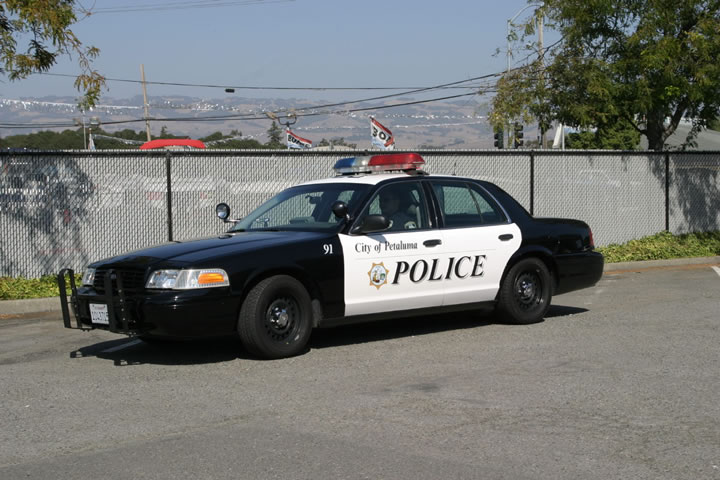
For writers, I have italicized common phrases used in cop culture conversation. Cops are like anyone else: they have their own vocabulary and lingo. Sprinkled throughout your manuscript, these carry the ring of authenticity. Also, for a not-quite complete but almost, list of California Law Enforcement Agencies search Wikipedia under that title. I only noted one agency missing-Rohnert Park Department of Public Safety!
Multi-jurisdictional Incidents

It should be noted in this post that overall responsibilities across jurisdictions (not within city limits) belongs to either the CHP or the local sheriff–depending on the event. The Highway Patrol takes the lead in incident related to traffic or hazardous materials on all state highways and unincorporated areas. They are often assisted by the California Highway Department, Department of Fish and Game, possibly a contract clean-up company and/or local fire district engines and personnel. Examples would be a pursuit on the highway (again, not within city limits), a natural disaster or a hazardous materials spill. As I said in previous blogs, city police handle municipalities and sheriff’s department handles crimes in all unincorporated areas. The exception is road rage incidents on highways (even within city limits).
Taking the Lead
Let’s say a bad guy decides to rob a convenience store in the city of San Rafael then crosses city limits to San Anselmo to hole up with a hostage. There could be a jurisdictional issue. The agency in which the event is currently occurring (hostage situation-San Anselmo) would probably take the lead on this call. However, there are variations because no two events are ever the same. What is to be determined is called primary investigatory authority. What if the bad guy robbed a bank–then the FBI would take the lead. Local police departments (PDs) would secure the scene. That starts with establishing a perimeter. No one wants soccer mom walking into a shoot-out so staffed barricades would be set up far enough away to keep the public safe. (Obviously, if needed evacuations would be done inside the perimeter as safety permits–sometimes it is safer to stay where one is.) But we will discuss the FBI in a later blog.

Back to our scenario: agency heads can hash out the “lead agency” and act accordingly. Why would San Rafael want the bad guy? What if he killed the convenience store clerk? Murder trumps everything–it is considered a capital crime and may be eligible for the death penalty. Clearly, the District Attorney would pursue a murder charge over false imprisonment (that is assuming the bad guy gives up without hurting his hostage.). Even so, all violations are charged by the agencies involved. The DA will sift through the reports, talk to witnesses and decide which are the most prosecutable (read: bad guy has a good chance of being convicted) crimes.
Another variation: San Anselmo is a small department–less than 20 sworn officers; San Rafael PD is much larger–with 65 sworn–and more resources. It is feasible that a chief may hand over control to another solely because the event outstrips the logistical ability of their department.
Once the lead agency is assigned, it is rarely changed. I have never seen that at a primary event. However, should an officer shoot or get shot, the game changes. The lead agency remains the same but only investigates the instigating occurrence. Third party detectives would be brought in to an officer involved shooting (OIC) to insure investigative impartiality.
Mutual Aid
If needed, the Incident Command System(ICS) under the Unified Command System will be instigated and will request mutual aid. This is just what it sounds like: asking for help (usually staffing but can also be specific equipment or team such as SWAT, Bomb Squad or K-9). Most counties have pre-planned mutual aid agreements so there are no surprises. ICS streamlines communications during a major event. The Incident Commander relays needs to department liaisons to move resources. Top tier personnel make sure details are handled.

Once again, I’ve used up my word allotment on information I had not quite planned to write about. It seems that these things need to be said. Although there isn’t great detail, just about every scenario has “qualifications”. This bears repeating: no two incidents are ever the same, ever.
There isn’t a cop, commander or dispatcher out there who doesn’t think what is the worst thing that can happen…then plans for it.
But that is real life.