Categories
Writer's Notes

Conferences: An Introvert’s Guide to Writing Conferences by Laurel S. Peterson

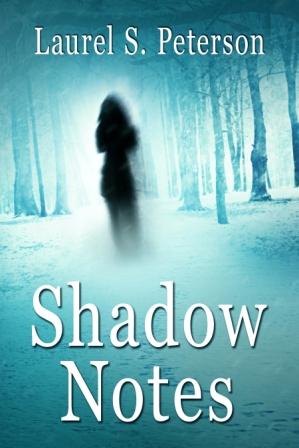
Peterson Shadow Notes Cover compressedBy Laurel S. Peterson

First, thanks so much, Thonie, for having me on your blog. I’m delighted to be here.

The number of conferences available to writers is legion, and figuring out how to choose among them can be overwhelming, especially if you’re at all like me: an introvert who prefers the company of close friends and family, work and the big brown eyes of my Labrador Retriever! I offer the following comparison among three types of conferences as a way of thinking about what might work for you.

The Literary Conference
The Association of Writers and Writing Programs (AWP) holds the mother of all literary conferences once a year, usually in the spring. It has grown so large that it now takes a convention center to host, and it brings in major literary writers from all over the U. S. Recent featured speakers have included Jaqueline Woodson, Azar Nafisi, and Colum McCann.

Its size makes it both intimidating and approachable. As an introvert, you can get lost in the massive crowds, going from panel discussion to presentation to book fair without anyone noticing—which can be either lonely or a relief. On the plus side, the panel discussions are often intimate, and provide opportunities to talk with both the writers on the panel and the conference attendees. Large conferences also offer fabulous speakers; it’s fun to listen to writers talk about their own work and to get insight into their creative processes. AWP also has an incredible book fair. Focused on small presses, it’s a football field’s worth of interesting books to explore by wonderful writers you might never have heard of. If for no other reason, the conference is worth this.

In addition to on-site events, there are lots of off-site readings and presentations, frequently hosted by MFA programs or small presses. The conference fee is cheaper if you join AWP, and joining gets you access to a great website with interesting articles and resources about writing, job postings in creative writing, editing, etc., and places to send your work.

The Genre Conference
Genre-focused conferences, like Bouchercon or Thrillerfest, are useful for genre writers, in the same way as the literary conference. They provide an opportunity to meet people you wouldn’t otherwise encounter, give you a chance to hear writers talk about their processes and publishing issues, and to peruse books by authors you might not see in your local bookstore or on Amazon. I have also found genre conferences to be much friendlier than literary conferences. The writers are more willing to talk to anyone—regardless of pedigree. Perhaps this is due to the difference in market; that is, the market for genre works is so much wider that genre writers perceive everyone as a potential reader.

Their panels are also focused specifically on the craft you are practicing, so the tips are immediately applicable to your writing efforts. while I’m often too tired to write during a conference, I do find myself jotting notes about how to approach my work once I recover!

The Working or Experiential Conference
My favorite conference is The Writers’ Police Academy, which is run by ex-police officer Lee Lofland. Everyone who attends is writing (it’s not a mixed fan/writer conference, like Bouchercon), so they are all interested in the information provided by the experts: firefighters, police officers, federal enforcement officers of various flavors—even canine officers—as well as forensics experts, psychologists, and so on. Because it is small and everyone stays in the same hotel and eats together, it is easy to make friends and to talk to the professionals, who join in with the festivities. Sisters in Crime (SinC) offers a discount to its membership, and SinC offers so many other benefits besides this that the membership is worth it whether you go to this conference or not.

Other conferences focusing on craft are also useful. Attendees are usually united in their desire to help themselves and be supportive of each other. My graduate alma mater, Manhattanville College, holds a Summer Writers’ Week that is grounded in a daily morning workshop. Afternoons are comprised of craft talks, publishing panels, and time to write before one returns to the workshop the following morning. Of the three, I find these working conferences the most useful, although I recognize that the other two are useful in terms of marketing one’s work once it has made its way into the world.

The other factor, of course, is money. None are cheap, and without employer support for professional development, I probably would not have attended nearly as many as I have. Even so, I always end up spending more money than I get back. So, the question is whether you get value for your money. I would suggest deciding beforehand what you want from the conference: is it to network? is it to connect with your market or a publisher? Go to AWP or Bouchercon (or its kin). Is it to work on your own writing or voice? Then an experiential conference is probably what you’re looking for. Being open makes a difference, as the surprise interactions, meet-ups, and discoveries are part of the fun. No matter which you finally choose, it’s an investment in your writing career.

~~~~~~~~~~~~~~~~~~~~~

Getting some great ideas about your next conference? Leave a comment, let us know!

—Thonie

~~~~~~~~~~~~~~~~~

www.utechristinphotography.comLaurel S. Peterson is a Professor of English at Norwalk Community College. She has written a mystery novel, Shadow Notes (Barking Rain Press), two poetry chapbooks, That’s the Way the Music Sounds (Finishing Line Press) and Talking to the Mirror (Last Automat Press), and a full-length collection, Do You Expect Your Art to Answer You? (Futurecycle Press). She currently serves as the town of Norwalk, Connecticut’s Poet Laureate. You can find her at www.laurelpeterson.com, on Twitter: @laurelwriter49, or on Facebook.
You can purchase her mystery novel Shadow Notes here: Buy and her poetry, Do You Expect Your Art to Answer? here: Buy.

Other useful links:
AWP: https://www.awpwriter.org/
Bouchercon: http://www.bouchercon.com/
Writer’s Police Academy: http://www.writerspoliceacademy.com/conference/
Sisters in Crime: http://www.sistersincrime.org/
Manhattanville College Summer Writer’s Week: https://www.mville.edu/summer-writers-week-manhattanville-college


Categories
Writer's Notes

Conferences: Where to go? Which to Choose?

SkinofTattoosCoverBy Christina Hoag

For crime fiction authors, the good news is that there are plenty of writing conferences. The bad news is that there are plenty of writing conferences. It can be hard to choose the best investment for your money and time.

I decided not to choose. I just went to a slew of them, although not all by any means. Not only did I have a great time at every one, I found value in all of them. Each offers something different, and from each I took away things I didn’t know before, as well as a host of new friends. Frankly for me, networking is one of the best reasons for attending conferences. I love meeting other writers, discussing, writing, publishing, reading. These are my peeps!

The two biggies are Bouchercon, held in a different city every year, and Thrillerfest, held in New York City. Both get well over 1,000 attendees. I chose to attend Thrillerfest this year, leaving Bouchercon for 2018. Thrillerfest is the most expensive con of the bunch, plus Manhattan is a pricey destination, which is something to keep in mind. But this is the place for networking and there’s plenty of opportunity to mingle and fangirl with the biggest names in the business from Lee Child to Lisa Gardner. Thrillerfest also hosts a separate event, Pitchfest, which attracts a ton of top agents and editors, a key advantage to being in the center publishing industry.

There are also a host of smaller regional conferences, usually sponsored by local chapters of the MWA and/or Sisters in Crime. These typically attract 200-300 attendees, including published and aspiring authors and fans, and cost $200-$350. Most offer authors a chance to participate as panelists and to sell and sign their books in the con bookshop, and make great promotional vehicles if you’ve got a new book out or are simply seeking exposure.

Cons have different requirements for panelists so that may affect where you choose to go if promotion is your goal. Sleuthfest, held around Florida, for example, requires panelists to be published by approved publishers. Killer Nashville is friendly to independent and pre-published writers while New England Crimebake in Boston does not allow authors to request panels and selects its own. Magna cum Murder in Indianapolis, California Crime Writers Conference, held biannually in Los Angeles, and Left Coast Crime, offered in a different western city every year, generally offer authors panel spots.

Another factor to look at is the con’s subgenre emphasis. Malice Domestic, held in Bethesda, Maryland, is geared to cozies and traditional mysteries while Thrillerfest is as its name suggests.

Finally, you may choose a particular conference simply because it’s in a place you want to visit or where you have friends or family. Whichever conference you choose, you can save by planning well in advance and taking advantage of early bird prices, usually starting the year before. Another cost-cutting tip: you can stay in less expensive hotels or with friends and Uber back and forth. I’m already looking forward to my next conference in 2018.

~~~~~~~~~~

ChristinaHoagAuthorHeadshotChristina Hoag is a former journalist for the Miami Herald and Associated Press who’s been threatened by a murderer’s girlfriend, had her laptop searched by Colombian guerrillas and phone tapped in Venezuela, hidden under a car to evade Guatemalan soldiers, posed as a nun to get inside a Caracas jail, interviewed gang members, bank robbers, thieves and thugs in prisons, shantytowns and slums, not to forget billionaires and presidents, some of whom fall into the previous categories. Her noir crime novel Skin of Tattoos (Martin Brown Publishing, 2016) was a finalist for the Silver Falchion Award for suspense, while her thriller Girl on the Brink (Fire and Ice YA, 2016) was named to Suspense Magazine’s Best of 2016 YA list. She also writes nonfiction, co-authoring Peace in the Hood: Working with Gang Members to End the Violence (Turner Publishing, 2014.

Christina makes her home in Los Angeles and lives on the web at www.christinahoag.com.

Her novel Skin of Tattoos is available at http://amzn.to/2bSRjqP


Categories
Writer's Notes

Writer’s Notes: Conferences

By Thonie Hevron


Conference pic
Thonie at the 2014 Redwood Writers Pen to Published Conference

December is an exciting month. The anticipation builds all month of Christmas, Hanukah or whatever holiday you celebrate. Gift-giving, family traditions, religious celebration are all part of it. But there’s another side of December that most people don’t think about: writers planning career strategies. December/January is a time when most people set new resolutions to change their lives. Be it losing weight, asking for a promotion, or planning a new book, these days authors need to think about their futures.

What’s in your personal inventory that needs improvement? Do you have a craft issue? Afraid of marketing? Are you searching for an agent, editor, or publisher?

Finding the right writing conference could help you find solutions to your problems. Almost everything I know, I learned from other writers, especially at conferences. Where better to get help than from other writers?

If you’ve ever researched a conference, you know there are many kinds. Laurel S. Peterson (her post appears on 12/15) talks about the different types. Her perspective is as an introvert—aren’t all writers mostly introverted? You’ll definitely find something to help. On 12/5, Christina Hoag give an overview of the most popular events—coast to coast. When I read her post, I changed my plans. You might, too.


2016-Conference-header-x2.jpg
Redwood Writers Conference for 2018 will be on April 21st. Click on the link below for further information.

Donna Schachter (12/22) and Michelle Drier (12/29) will have something to offer as well. In January, Gil Mansergh, former Director of the California Writers Club Conference at Asilomar for seven years, has written an honest perspective of the realities of what conferences advertise, what they really provide, and what writers at different skill levels can learn by attending. Nancy J. Cohen will chime in as well in January with fabulous advice on how to choose the right conference as well as some resources.

~~~

Where to find conferences? Word of mouth, your writer’s community (club, critique group, etc.), online: Google ‘Writers Conferences’ but your best bet is peer recommendations. Even if you’re a new author, identify those in your literary community and let them guide you. They have a better sense of your writing needs than the internet does.

How do conferences work? A lot of conferences have “tracks” which are topics you can choose and follow through the event. For instance, popular tracks are “genre,” “craft,” “platform & promotion,” “the business of writing,” and “getting published.” It’s not mandatory to stay within a track for the duration, though you want to be sure about this before sending in your money. Some events are strict while others use it as a guideline.

They’re expensive, aren’t they? There are ways around spending a fortune at conferences, but I haven’t found them yet. Okay, you can stay at a less pricey hotel (or if you have friends or relatives in the area) but that detracts from the experience. There’s a comradery between attendees who sweat through the same pitch sessions or learn earth-shattering lessons from the same presenters. Plus, you never know with whom you’ll share the elevator. Ever heard of the elevator pitch? You won’t get the opportunity if you’re staying with Aunt Sally.

You must weigh the expenditure against the experience you hope to gain.

My first big event was the San Francisco Writers Conference. It was the big time—I pitched to Donald Maass and several other top tier agents. I prepared myself ahead of time by practicing my pitch. After attending my small Redwood Writers Conferences, I knew what would to expect. Attending an event with prominent professionals of the literary world was daunting but with preparation, there were few surprises. Okay, at the “Speed-pitching” event, the agent who specialized in film rights listened politely to my twenty-second pitch, thought for a moment, then said, “Hm, woman in jeopardy. It’s been done. Next!” His rudeness went into my arsenal for developing a thicker skin. I still have many professional relationships that began in San Francisco in 2011.

PSWA header4My favorite conference is smaller and more reasonable. The Public Safety Writers Association holds a 4-day event every year in Las Vegas. It’s where I met my first publisher. It’s intimate yet not cliquish. Welcoming and–well, you’ll hear more from Conference Director Mike Black in January.

I could go on and on about conferences but next Friday (in December and January) will begin presentations from seven other authors with their perspectives.

One last thing—do it. You may not get an agent or publisher, but what you learn should increase your craft and experience.

That’s vital in today’s publishing scene.


Categories
Writer's Notes

When You Hit the Brick Wall: Pamela Beason


BeasonSmall photo flipped
Author Pamela Beason

By Pamela Beason
I can SO identify with this topic. Once, when I was whining about how difficult it was to be discovered as an author, my mother remarked, “Well, you must like hitting your head against a brick wall.” (Such support, right? But I digress…) Of course she meant that I could do much easier things instead of trying to write and publish novels. And in that, she was correct.

It’s hard to be an author. When I speak to high school students, I ask them to name the most important trait needed to become a successful author. They guess aspects like “good grammar” and “imagination,” which are important, but not the most important. The correct answer is “self discipline.” Nobody makes a novelist work forty hours a week. There’s usually no guarantee of payoff for all the hours we put into assembling words into stories. We have to make ourselves sit down and write and edit and finish a book. And then most of us have to make ourselves market that book, too. So, as we toil away at our computers and rearrange endless Post-It notes, it’s all too easy to hit the wall and simply not want to continue.
I smash into that dang wall on a pretty regular basis. I get stuck on plots. I decide my writing is total crap. I’m almost always certain I don’t have a clue how to market a book. Sometimes I don’t even how to finish the freaking story.
But I know I want to try. So, I back up from that wall, bandage my injuries, then take a long solo walk or paddle my kayak around the bay. Some evenings, I’ve been known to have several glasses of wine and feel sorry for myself. But I allow myself only a day to wallow in self-pity. The next day, I suck down several cups of good coffee and get to work on employing these techniques for getting over or around that invisible barricade.

  • To help with writing:
    • I read a book that I love that is similar to what I’m trying to write, and make notes about what happens in each chapter. This must be a book that I’ve read at least once before, because I don’t want to get so involved in the story that I can’t see the structure. I’m not going to copy the plot or characters, but taking notes about the structure allows me to see how the author built the story. Then I can often see where I am going wrong, usually by telling too much too soon, or straying off on some tangent that kills the suspense.
    • I watch a movie in the same genre and take notes of the scenes to accomplish the same goal I described above. Again, this should be a movie I’ve seen before, so I don’t get too wrapped up in what’s going to happen next.
    • I read an instructional book on writing mysteries. Yes, I know all this stuff, but for some reason I need to be reminded over and over again.
    • I brainstorm with another writer, asking for criticism of my story and for any and all ideas for improvement, no matter how wacky. It’s easy to lose all objectivity about your own writing, and it’s easy to fall into a rut, so you need to seek out the ideas and opinions of others. I generally don’t end up using the ideas presented to me, but brainstorming sessions open my brain to new possibilities.
    • I practice writing the short description for the story that will go on Amazon or on the back of the book. This is always an agonizing exercise for me, but it often causes me to focus on what the heck the story is really about.


  • To help with marketing:
    • I Google other authors who are similar to me and look at what they do on Facebook and author websites and such. Since I am an indie author now, I mostly look at other indie authors, because traditional publishers have larger advertising budgets and more marketing opportunities than most indies do.
    • I ask other authors at my level (or slightly above) and in my genre which marketing techniques and advertising sites have worked for them. I write mysteries, so it won’t help much to ask a nonfiction author or a romance or fantasy author; I’m seeking ideas on what works for marketing mysteries.

The process of writing, editing, and marketing a book takes a long time for most of us. I meet many writers who finished a story but did not bother to proofread or polish it, uploaded the rough version to the internet and then got frustrated and bitter when that effort did not result in massive sales. I call this group “hobby writers.” They aren’t yet professional authors.
Professional authors know that writing and marketing good books is work, and they are willing to put in the days to push on when they hit the wall. The process doesn’t necessarily get easier with each book, but we know that when that barricade inevitably looms in front of us, we will find a way to get around it.

~~~

Backcountry_ebook-final-cover-2x3-200x300Pamela Beason is the author of Backcountry, Book 4 of the Sam Westin series, s now available in eBook form almost everywhere. Print copies are available from Amazon and Ingram. She is the author of nine full-length novels: The Only Witness and The Only Clue in the Neema Mysteries, romantic suspense novel Shaken and novella Call of the Jaguar, and Endangered, Bear Bait, Undercurrents, and Backcountry in the Sam Westin Mysteries, and young adult novels Race with Danger and Race to Truth in the Run for Your Life trilogy). I also wrote the nonfiction eBooks SAVE Your Money, Your Sanity, and Our Planet and So You Want to Be a PI? and multiple informational eBooks for authors. You can check out everything from the Pam’s Books link here.
In Backcountry, after the murder of two friends on a popular hiking trail, Sam reluctantly agrees to take over the job of leading a group of troubled teens on a three-week wilderness therapy program. But she soon begins to see signs that the killer may be traveling through the wilderness with her band of teen misfits.

When not writing, she’s out hiking and kayaking and having adventures so she’ll have something to write about!  She has a jam-packed, wonderful life. Carpe diem!

Categories
Writer's Notes

Writer’s Notes: BRICK WALLS FOR WRITERS

By Nancy Raven Smith


LS 3.8MB-1There have been lots of brick walls in my life, such as the ones I used to jump my horse over, the ones in relationships, and those on the outer walls of the house I grew up in. But let’s discuss those pesky ones that pop up when I’m writing. Especially since I’m a pantster.

As a pantster, I usually know the character, some of the major act breaks, and the ending when I start a writing project. But everything is up for change and development as I go along. Plotters/planners spend a lot of time outlining and making decisions before starting. I spend the same time tightening and rewriting after my first draft. As an explorer, some of the paths I take end in box canyons, and often the only way out is to return to the mouth of the canyon and move on. So I hit a lot of canyon walls, but I don’t count these as brick walls. More like taking the scenic route.

When a serious block appears on a project and my forward writing motion comes to a halt, I often wish that there was a magical horse that could help me leap over the problem. Sadly I haven’t found that horse yet. So in the meantime, I’ll share something that does work for me in the hope that it will help other writers with the same problem.

When I start writing, there are always scattered scenes that I see in my head. A love scene here or a bit of action there that comes late in the second act, or the ending of my project. These are scenes that I haven’t written yet because I haven’t reached them chronologically. So if I’m blocked from writing chronologically forward with the story, I’ll skip ahead and write one of those scenes. Sometimes as I write, my chronological log jam will break and when I finish the new scene, I can go back to where I was stopped. Other times not. If that happens, I’ll write another miscellaneous scene I know. If I write enough of those scenes, I’ll start connecting them and begin moving forward again.

While writing my second ever screenplay, I hit a serious wall right before the midpoint. I finally managed to keep going because I knew the ending very clearly in my mind. So I wrote the ending. When I did, I realized I knew the scene before it, and then the scene before that. As I continued writing backwards, I actually backed into the midpoint and the first half of my script. Then I smoothed, added, subtracted, and polished the screenplay during the subsequent rewrites.

Lest you think this produces a bad piece of work, that screenplay ended up in the top six out of over three thousand entries in the Disney Fellowship Competition. So I can honestly say this does work for me.

I hope this idea is a help if you get stuck somewhere, and I’d love to hear if anyone else has an unusual way of addressing the challenges they run into when brick walls stop their writing.


~~~~~~~~~~~~~~~~~

In Land Sharks, Lexi Winslow is a fraud investigator at a private Beverly Hills bank. As a favor to her boss, she’s sent to fetch home the daughter of the bank’s biggest client.
So she’s off to Sumatra, where the wayward daughter and her latest boyfriend were last seen. She has the added complication of having to take the boss’ inexperienced son along for training.

Once Lexi arrives at an isolated resort carved out of the remote Sumatran jungle, she discovers there are more deadly dangers inside the hotel than the crocodiles and head hunters outside. It is a hotel where women check in, but most don’t check out.

And of all the places in the world, Lexi runs into her ex-lover, who not only conned his way into her heart, but is always conning someone somewhere. Lexi is determined to find out what is going on and to get everyone out alive.

~~~~~~~~~~~~~~~

NANCY RAVEN SMITH

HeadShotNancy LS Banner2Nancy Raven Smith grew up in the Virginia horse country near Washington D.C. where she was an active member of the equestrian community. She also rescued and retrained former racehorses as well as cats and dogs for over twenty years. Raven Smith was a contributing writer and cartoonist for several sports magazines such as The Chronicle of the Horse and Practical Horseman and her screenplays have won multiple awards.

Raven Smith is a member of Sisters in Crime, Women in Film, Romance Writers of America, & Mystery Writers of America. Her debut novel, Land Sharks – A Swindle in Sumatra, was chosen as an Amazon/Kindle Scout Program Selection Winner.

http://www.NancyRavenSmith.com
http://www.Facebook.com/NancyRavenSmithWriter
http://TheReluctantFarmerofWhimseyHill.com
Reluctant Farmer on Amazon – http://amzn.to/1XoblsP
Land Sharks on Amazon – http://amzn.to/1JuIHk

Categories
Writer's Notes

Hitting That Brick Wall: Marni Graff

By Marni Graff


Marni K Graff Hdshot
Marni Graff

When my first mystery was published, a friend bought me a gift called “Writers Block.” You may have seen it in stores—it’s an actual small block of pages, and when you flip inside, each page has ideas, prompts, simply tons of ways to keep from getting stuck in your writing. I used it a few times but ended up passing it on to a young writer as I developed my own ways to never face the wall.


When your day’s work consists of facing that blank sea of white pages, it can be daunting to think you must fill that whiteness, but after five mysteries in print, I’ve come up with several ways to avoid sitting down to write, only to find myself staring at the page for inspiration. And I’m willing to share my tricks with you.

  • Stop for the day in the middle of a chapter or scene. It’s my most-used pattern. The next time I sit down, I’m ready to plunge right in and finish where I left off. This also gives me time to think about how I want to end that segment to get the greatest oomph out of it; what kind of cliffhanger would work best; and what would be the best place to go next. I do a lot of this thinking when I’m cooking dinner or waiting for sleep to overtake me! And once a scene or chapter is finished, I plunge into the next and stop there, repeating the process.
  • Be prepared. The more research and planning I do upfront, the easier the writing goes along. My process is to outline a basic storyline, primarily the beginning chapters, before I start a new book, but I always know my all-important ending—who did it and why—so there are multiple paths I can take to get there through what I call the Muddled Middle. I keep a notebook filled with jottings for each novel, from character bibles to potential subplots, so I have a handy reference to turn to. I am not a writer who completely outlines the entire story before writing, but this helps me along the way and gives me something to consult.
  • Write out of order. On occasion it will seem as if my characters are whining, or I’m having difficulty getting inside Nora Tierney or Trudy Genova’s head that particular day. I want to write but I need to take a break from that person. Instead of walking away from my desk, I write a scene I know I’ll need down the road. It’s a kind of treat for myself that way. I still accomplish adding to the manuscript, but I’m happier writing something new, and often find that when I return to my main characters, they’re more pleasant for me to write. Maybe we both needed a break?

These are the three main things I do to prevent a brick wall, and they work well for me. Now if someone would just tell me how to ignore my adorable puppies, Seamus and Fiona, when they want me to take them out to play, I’d have more books in print!

~~~

GoldenHour MKGraffMarni Graff’s newest Nora Tierney English Mystery is THE GOLDEN HOUR, the fourth in the award-wining series. She also writes the Trudy Genova Manhattan Mysteries, as well as the crime review blog, Auntie M Writes (www.auntiemwrites.com). You can reach Marni at: bluevirgin.graff@gmail.com or @GraffMarni on Twitter. THE GOLDEN HOUR, as with all of her books, are available on Amazon.com in paperback, Kindle and Audible, and signed copies at Bridle Path Press: www.bridlepathpress.com.


Categories
Writer's Notes

Writers’ Notes: Hitting That Brick Wall

By Thonie Hevron

Everybody's a critic
Everybody’s a critic.

Everyone has time when they come across a barrier to their progress. It happened often when I first learned how to ride horses. All the videos, books, advice and trainers’ lessons barraged my consciousness while I was trying to effectively steer a 1300-pound animal with a brain the size of a walnut. [To be painfully accurate: The problem is the cerebrum, the thinking part, is only slightly larger than a walnut. The rest–all 1.5 to 2 lbs. of it–is  cerebellum, the part of the brain that controls gross muscle coordination, balance and body functions.]

The one thing that got me on track was a trainer saying, “If it’s not working, go back to basics.” Start from the beginning and work up until you work though the barrier. Usually by the time I did all that, the barrier had dropped. To borrow from Horse Listening, a wonderful training site, I’ve para-phrased the popular equine rider training blog (dated originally 2/24/2013) and applied them to the writing craft: 10 Tips for the Average Rider.

1. Find a good teacher-whether it’s a night class, an MFA, a mentor or a critique group, find someone who will urge you on, teach you new things, and maybe find another way to look at the same old issue.

2. Be patient-no way around this.

3. Practice-write every day, even if it’s journaling, blogging, marketing text. Just practice.

4. Accept your limitations-okay, I know I’ll never write the great American Literary Novel. But I can put out a pretty darn good mystery/thriller!

5. Find your comfort/un-comfort-whether it’s writing a love or action scene/making a speech or putting your work out there (in all probability to be dismissed by agents, publishers, etc.), learn to do it. Baby steps, practice all come into play here.

6. Enjoy the moment-this refers to when a horse does all the things your fingers, hands, back, butt and legs are telling him to do—at the same time. There’s no better feeling than the gliding on air of sinewy suspension, unless it’s getting an ovation after a talk or class you’ve given. Maybe your first fan mail. Enjoy it, savor the feeling. This is what can keep you going.

7. Set goal-short term (500 words today), long term (a completed manuscript by May 2018) and/or marketing plan. My publisher required me to do one for each book and they are invaluable.

8. Persevere-if you quit, it’s a sure thing you will fail. So, don’t.

9. Read, watch, imitate-Read craft books, watch your favorite author’s marketing technique/website and imitate!

10. Keep practicing-develop a routine so there’s no wiggle room to say, “Ooh, I don’t feel like writing today.”
monitorSee how this applies to writing? There are some days when I sit and stare at my blank page. The characters are revolting, the story arc fell flat, dialog is stilted. Okay, start at the beginning. Write one sentence. Don’t like it? Tough. Delete it tomorrow. Write another sentence, put some dialog in it. Throw in a twist that you didn’t plan. Write another sentence.

Pretty soon a whole scene will lay before you. If you don’t like it, wait until tomorrow to delete it. Give it some time to percolate in your imagination. Maybe losing it is what needs to happen; maybe this little side-trip is what you needed to jump-start your creativity.
I cannot buy into writer’s block—for me. I can only speak for myself. When I decided to make writing a professional enterprise, my husband and I decided it needed to treat it like a job. And it is. During my law enforcement career, I went to work every day. The boss wouldn’t have kept paying me if I’d said, “I’m not coming in today. My muse is on vacation.”

When I write, I apply the same principle. My writing routine varies with the seasons, family needs and activities. And, I may not work on my current novel. I have an active blog with two posts a week, a website, marketing and appearances to prepare. There is always something to do to further my writing.

Other ideas to move me through a rough patch:
• Go back to my initial inspiration for the story and review. See if I can capture the spirit of it.
• I go for a walk or hike; a trip to the beach. Sometimes, getting away from that blank page can refresh my creativity.
• I’m an inveterate note-taker. Often reviewing these scribbles can nudge me back to where I need to go.


Marni K Graff Hdshot
Marni Graff

The upcoming Fridays in November, you will find three other authors’ perspective on how they re-start their muse. If you’re like me, you’ll find something to help you over that hurdle. Marni Graff will appear on November 10th, Nancy Raven Smith on November 17th, and Pamela Beason is the final post on November 24th.


~~~

Don’t forget to check out the Sunday posts from the law enforcement veterans, Hal Collier, Mikey, and Ed Meckle (all retired LAPD), and retired California Corrections Officer John Schick. Their stories will make you laugh, cry, cringe or all the above!


Categories
Writer's Notes

Multi-tasking: Paty Jager

Multi-tasking is a Part of Life by Paty Jager

Haunting Corpse 5x8I would say anyone who isn’t in a coma or traction is a multi-tasker. Life is full of multiple things you have to do every day to live.

But an author has to be a highly skilled multi-tasker. And a self-published author has to be even more so.

For example: I finish a book, it is sent to my critique partners (CPs). While it’s gone, I start planning out the next book, and depending on how long it takes the CPs, I start writing it. I’m on a roll and the first book comes back from the CPs. Now, I need to work on the suggestions they’ve made and send it out to the next level of reader. The manuscript is sent on, and I go back to the book I’d started. Oh! I just heard from a box set I’m in that we need to promote that because the ranking is going down. I do that, and remember that I haven’t promoted the last books in my two series lately. I do that and get back to writing the book.

20171006_155217The first book comes back for more revisions. I’ve been in contact with my cover designer (Covered by CLKeerins http://coveredbyclkeerins.com/) and my eBook cover is ready. When the revisions are done, I send that to my line editor and get back to the second book. Oh, and I’ve been asked to be in another multi-author project. I look at my white board with all my projects and see I can fit it in and agree to that.

I’m writing on book two and the line edits come back. Now I go through book one another time and then format it for eBook. When that’s done, I upload it to the eBook vendors and then make a print format to upload to Ingram Spark. But first I have to let my cover designer know the pages so she can make the print version of the cover. When the inside is formatted, I wait for the cover and write on book two while also promoting the eBooks I just put up on the vendor sites. In some cases, I do a big release party or blog tour but not always. If so, then I would be arranging that while I was writing book one.

Oh, and I forgot- while spending 6-8 hours a day at the writing career, I’m also feeding horses twice a day, letting dogs in and out of the house, feeding my husband three meals, doing laundry, cleaning house, and I’m at my husband’s beck and call to help with haying, fixing irrigation pipes, and any task he has that requires extra hands. And quite often entertaining family and friends or traveling to workshops and conferences.

Multi-tasking is a part of everyday life.

~~~

Haunting Corpse- book 9 in the Shandra Higheagle Mystery series (https://www.patyjager.net/mystery.html)

Desertion…Wrath…Murder
A runaway bride, murder, and arson has Shandra Higheagle sleuthing again. Sorting through the debris of her best friend’s childhood, Shandra believes she must solve the murder before her friend becomes the next victim.
Stumbling upon a dead body, Detective Ryan Greer is determined to bring the killer to justice before Shandra becomes too entangled in her friend’s dysfunctional past. He hopes he’s not too late. Her deceased grandmother has already visited her dreams, putting Shandra in the middle of his investigation and danger.

Universal buy link- https://www.books2read.com/u/3J0ZWX

Paty Jager 2017 (314x400)Paty Jager is an award-winning author of 32 novels, 6 novellas, and numerous anthologies of murder mystery, western romance, and action adventure. All her work has Western or Native American elements in them along with hints of humor and engaging characters. This is what Mysteries Etc says about her Shandra Higheagle mystery series: “Mystery, romance, small town, and Native American heritage combine to make a compelling read.”
blog / website / Facebook / Paty’s Posse / Goodreads / Twitter / Pinterest


Categories
Writer's Notes

Multi-tasking: Catharine Bramkamp

Multi-tasking – the Home Game

Bramkamp picBy Catharine Bramkamp

It is currently understood that it takes 20 minutes or more to re-focus your attention after a distraction (I read that on an email).  Every time we hear a ping, we react.  We not only lose a few minutes on the distraction, but we forfeit many more precious minutes mulling over the new information, processing it, then fighting our way back to the task at hand.  Just when we hit the  creative zone again, ping!  It could be another friend in Tanzania who lost her wallet or it could be an agent responding to our query of seven months ago. Already distracted; we open another email.


Reacting itself is addicting.  Reacting is busy. We look busy, we feel busy. We respond to email and notifications while listening in on a conference call and editing an article due in an hour.  Our Puritan ancestors would be thrilled –    knit while you pray, talk while you plant – read the bible during those long cart rides to the next village. Theirs and our philosophy is essentially: multitasker can’t get in trouble.  We are too unfocused and distracted to do any harm. You light multiple fires in the morning and the spend the afternoon stamping them to ash.

In the first Apple Computer ad, a buffed woman threw a big hammer into an enormous screen. It was a big deal. 2007, the year of the iPhone launch, was another such big moment; the moment our attention splintered into a thousand little pieces. Who knew that original Apple metaphor would be so portentous?  The competition for our attention is fierce and we are told to believe that resistance is futile. Do three things at once, answer all texts immediately.  Snap to it!

But after a day of reacting, we often find we didn’t accomplish much of anything worthwhile, and yet we are not only too tired to get into trouble, we are too exhausted to protest.

Should we protest? Multitasking has its own rewards.  Reacting to new stimulus is fun.  Long projects requiring attention and sustained work, can be boring and overwhelming.  Even getting into trouble demands some kind of plan.

If all the small distractions of the day are more compelling than the large task you claim is important, it may be time to scrutinize that large task.

You can use all the blocking codes and systems you like that offer a distraction free environment for hours at a time (there are many to choose from which should tell us something) , but if you aren’t dedicated to the project and willing to go dive deep into your creative  zone, maybe the compulsion to multitask is a sign that the idea or project before you isn’t  enough. Maybe you just aren’t into it – yet.

Like wrenching ourselves away from Facebook, it takes more than a few minutes to return to a creative zone.  Give those large projects hours of work, like three distraction free hours.  That will help you decide that you love it, and the hours spent have been satisfying and productive. Or those hours were as painful as preparing to rip off a band-aid.

We would do well by ourselves and our own efforts if we separated the Task from the Multi. Determine what is truly important, or better, what you love.  Move the project along or move it out of the to do list.

Avoiding a project contributes to our compulsion to privilege distraction over deliverables. No distraction-free, increase productivity, creative zone guarantee program can help if you aren’t committed to the project itself. An hour or two focusing on a single project can be the best way to start repairing the shattered glass of your attention without bleeding out.

  ~~~


C Bramkamp author pic
Catharine Bramkamp

Catharine Bramkamp holds an MA in Creative Writing, a BA in English and a professional certificate in Social Media. She has written 17 novels and 3 books on writing. Her poetry has been included in a dozen anthologies including And the Beats Go On (she was editor as well) and the chapbook Ammonia Sunrise (Finishing Line Press). Her current book – Don’t Write Like We Talk is based on her co-producer experience creating 200 plus episodes of the Newbie Writers Podcast. She is the Chief Storytelling Officer for technical companies because everyone has a story.


Bramkamp pic

https://www.amazon.com/dp/B071G4TYZ1/ref=sr_1_1?ie=UTF8&qid=1496861187&sr=8-1&keywords=Damien+Boath

Catharine Bramkamp
Writing Coach, Podcast Producer, Chief Storytelling Officer
707 478 1855 //http://www.YourBookStartsHere.com //cbramkamp@gmail.com

www.Yourbookstartshere.com


Categories
Writer's Notes

Multi-tasking: Susanna Janssen

Darn and Double Darn: The Multi-tasker Mindset


Head shot white larger than 300 kb
Susanna Janssen

I’m driving to the airport this beautiful autumn afternoon. I could be listening to my Italian lesson CD to make good use of time, but a pressing assignment is calling forth my multi-tasking prowess. What better way to write a blogpost about multi-tasking than to be in the act as I roar down the freeway, exercising my already-perfected skill of writing on a clipboard while keeping one hand on the wheel and both eyes on the road?
Long drives are richly productive times for me. There’s something about the act of sitting still while moving fast that fires my synapses into high creative gear. Whether it’s free-flowing ideas or a particular topic to flesh out, I can fill page after page of slanting scribble and gnarled words in the expression of prolific thoughts. My penmanship has never been pretty even with perfect posture, proper lighting and a pricey writing instrument, so deciphering the messages and the order of those dozen or so loose-leaf pages all over the passenger seat and floor of my car is always a challenge. Writing while driving is my principal multi-task to further my writing career, but it’s only one tenth of my multi-tasking pie.

 
dictionary and wordsI start each day convinced I have adequate blocks of time to dedicate to my big projects, and the same thing happens every time: Life gets in the way in the form of emails, social media, the need to eat and do the laundry, children and animals that beg for attention, and phone calls. Every major project requires quality focused attention, but life’s big and little necessities must be dealt with too. That’s where the other ninety percent of my multi-task capital is invested. I’m not one for hours-long phone calls, but there are a few people with whom it’s unavoidable. When one of them calls, it can go either way: “How frustrating! Aunt Bea phoned and I heard about her bee-keeping manual for two hours,” or “Aunt Bea called to chat about Bee Bliss, and you wouldn’t believe what I accomplished in those two hours! The dishwasher got unloaded, the veggies are prepped for dinner, I folded the laundry and polished the chandelier for the first time ever, the sliding door runners are sparkling clean, sixty dollars in quarters are rolled and ready for deposit, hundreds of old emails are now deleted, there’s freshly juiced grapefruit in the fridge, I filled fifty gelatin capsules with organic turmeric to ward off inflammation and chopped a bowlful of ginger to improve digestion, I touched up the black canvas on my old espadrilles with permanent marker, filed my nails, ironed two shirts, brushed the cat, and best of all, I saved at least twenty dollars by darning the toes of my socks!”
Every one of those aforementioned multitasks I have accomplished during long phone calls, and here’s the secret: I keep a list of some “back-burner”, fairly mindless chores taped to the door of my home office. When Aunt Bee rings, instead of my mood progressing from warmth, to boredom, to anxiety, I look forward to a sweet chat during a productive hour. I actually do learn secrets from this most enthusiastic lover of bees, and I have a drawerful of darned socks, plus extra time to devote to the big projects as satisfying proof that selective multi-tasking works.

~~~

Wordstruck! The Fun and Fascination of Language:

Z jpg new cover front only

Can one book excite the Brain, warm the Heart, tickle the Funny bone, and further a lifelong love of Reading? Wordstruck! delivers.
It’s sixty savory servings of language topics full of humor, imagination and insight that promise to nourish all those parts of you.
Wordstruck! is the 2017 winner of three national awards including First place in the Humor category of the Next Generation Indie Book Awards.

~~~


Head shot white larger than 300 kb
Susanna Janssen

Foreign language educator, author, speaker, and newspaper columnist on words, language, cultures, and travel, Susanna Janssen is a master teacher and enthusiastic crusader for second language learning at any age to benefit one’s brain, career, bank account, and world view. She is a passionate advocate for developing a lifelong devotion to reading—a love affair that promises to be ever fresh and stimulating. Susanna continues to teach Spanish and Italian, coach foreign language learners on skill development and fluency, and inspire people of all ages and interests to keep reaching for another satisfying read.