Ed Meckle joined the LAPD in 1956 and I followed in his footsteps in 1970. Our careers over-lapped for about six years but we never met before attending a retired officers luncheon. We have become close friends even though some of our experiences were very similar as well as very different. This Ramblings is a collaboration of our experiences in patrol decades apart.
In Ed’s own words, he will describe what it was like working patrol in the 50’s. Times were different, and no one had video cameras or cell phones. The police were expected to keep the peace, no matter how. We will take you through what being a LAPD officer was like in different generations.
My experiences were a generation of change. I was lucky to have a little of both worlds. Unlike the dinosaurs, most during my era survived by evolving. You changed your tactics, or you looked for new work.
Police Cars
Ed Meckle 1956
Vintage LAPD patrol cars at Hermosa Beach St. Patrick’s Day 2011
Squad car, scout, cruiser, prowl, panda—whatever the name, they are the patrol/radio cars. The first line of defense, they are to the LAPD what the infantry is to the army.
The cars were tired. They were two- and three-year old Chevy and Plymouth 4 doors, the cheapest they could buy. Manual transmissions, yes, clutch and shift lever on the steering column. The division had one automatic transmission car for test purposes (will it be ok for police work?).
Bench vinyl-covered seats, no, repeat no seat belts. Two solid roof reds (mickey mouse ears) with a large growler siren between. Cars were so under powered that the siren operated by horn ring actually slowed the car down as pitch went up. No air conditioners and heaters never worked.
Basic, basic radio with a hand-held mike—red/green light for transmit/listen.
Hal Collier 1970
We were still driving two and year-old Plymouths. They were all automatic transmissions and the heater worked sometimes. No air or power steering in the beginning. The brakes on the ‘69 Plymouths only worked after heating up. I almost had a few accidents just trying to drive out of the station parking lot.
We also had the tin cans red lights as Ed described and I remember the growler siren on a few of the older cars. We had seat belts, but they were neatly tied in knots and stuffed under the seats. I considered Plymouths the best police car in my career. Most had over 100,000 miles and sometimes the door rests came off the door when you tried to exit, but the engines were strong. If you were in a fight for your life and requested help, you could hear the carburetor of that Plymouth open and the roar of that engine. You knew help was soon to arrive.
Later in my career we drove Fords, Chevys and even a few Matadors. They had air and power steering but not as fast as the old Plymouths. Just when I retired they switched to Ford Explorers. Lots of room—they needed it with the computer stuffed in the dash. No more bench seats and they removed the cup holders. Where will I put my latte coffee?
LAPD Cruiser at West Valley Station photo taken 2007
My son, who is still on the job, says all the black/whites have the latest technology: light bar instead of the tin cans, MDT’s (mobile digital terminals-computers), some have dash cameras and even a few have FLIR (Forward Looking Infrared cameras). They even have a camera that reads license plates automatically. We’ve come a long way since Ed’s days!
Next, we’ll describe Police Stations from 1956 to 2005. Ed & Hal
–From Thonie, my error—I posted Police Stations back on January 21, 2018. Here’s the link in case you missed it.
Suffering from in-between project blues? The soggy middle doldrums? Plain old writer’s block? Enter a writing contest! Contests can be a great way to rev up your muse. Think of them as the jumper cables to your stalled creative engine. And they’re fun!
Nowadays, finding a contest that matches your interest is easy. No more buying countless magazines to peruse the back for possible contests or shelling out more money than you make for a hefty tome of publication markets and contests. A quick Google search will yield a variety of contests in all different genres.
They can run the gamut from free to ones that require an entry fee, fun just-to-get-your-creative-juices-flowing ones to those that offer prizes and/or publication for winners. Here are a few sources to get you started:
The Redwood Writers’ Club, http://redwoodwriters.org/contests/, a non-profit organization for writers of all genres, runs three themed contests a year. Upcoming contests are Memoir (launching on May 20 with submission deadline of June 24) and Young Adult and Middle Grade (launching Sept. 9, with submission deadline of Oct. 21). Quite a few reputable sources cull contests from around the nation and internationally:
For theatre and dramatic works, the Burry Man Writer’s Center is a great resource for places around the world to send your plays: http://www.burryman.com/submissions.html
Short+Sweet Ten-Minute Play Festival, billed as the largest ten-minute play festival in the world, has 12 international festival venues from Australia, New Zealand, India, Malaysia, Saudi Arabia, to the US. Submitting to one festival will enter you in consideration for all of them: https://shortandsweet.org/festivals/theatre.
Many writing contests charge an entry fee. These fees generally pay a stipend for judges to read the submissions and go towards the prizes. But are they legit? As with anything having to do with the internet, make sure you do your research and check your sources. There are plenty of legitimate contests which charge a fee (Writer’s Digest Annual Writing Competition has now gone up to the hefty sum of $35 per entry). But there are also scams that offer a writer the chance of publication—until you find out you have to pay $75 to buy the book (usually anthologies) before you’re guaranteed you’ll see your name in print. Whether you want to shell out money to enter a contest is purely personal, but here are some things to consider:
Your odds of winning. Are you competing with 25 writers or 250?
The ratio of entry fee to prizes—are you paying $20 for the chance of winning $50?
Do you get feedback? Access to editors and agents?
Are previous winners listed on the website? (You can write to them and get some feedback on their experience)
Have the judges published in or worked with the contest genre?
If you do submit to a contest, remember to follow submission guidelines. If the limit is 10 pages, don’t send 11. If the desired font is 12-point Times New Roman, don’t use 14-point Helvetica. As the General Contest Chair for Redwood Writers, I’m always amazed that with every contest, there are one or two submissions that have not complied with the guidelines. What happens to these submissions? They don’t get read. So, as with any submissions, be it to a contest or a publisher, give your story the best chance of getting past the first reader.
If you have any questions on contests, particular the Redwood Writer contests, please contact me at natashayim@icloud.com
~~
Natasha Yim at a Writer’s Retreat in Port Orchard, Washington
I was born in Kuala Lumpur, Malaysia, but attended elementary school in Singapore, and high school in Hong Kong, where we moved to be closer to my Mom’s family. In 1979, I came to the U.S. for college and graduated from Dominican University in San Rafael, California with a B.A. in English Literature with a Writing Emphasis, and a M.S. in Counseling Psychology. I worked with kids in residential treatment centers, group homes, and finally, with Mendocino County Child Protective Services. I left to become a stay-at-home mom for 12 years to my 3 kids, but am now back working part-time at the Mendocino County Office of Education in Northern California. I enjoy writing in different genres and, in addition to children’s books, have written magazine articles (both for kids and adults), short plays, play and book reviews, and am currently working on a young adult and a middle grade novel.
It is early morning, February 4, 2018, Super Bowl Sunday. I have just finished reading of Mikey’s park adventures with a nature lover. I was reminded of several park funnies.
Mikey, you get the credit or blame for this column.
Three as an officer and two years a sergeant at Metro supplied me with a few stories.
At that time, it was custom to recap a concluded assignment at roll call. The people in on the pinch got to tell the story, sort of bragging rights.
I did not work this detail but got the story there.
The “Baby Doll Flasher” was terrorizing the horse trails in Griffith Park.
Wearing only a baby doll nighty and a baseball cap (very fashionable) he targeted only female riders. Singles or in groups, it made no difference to him. He leapt from the bushes, shouted some obscenity, flashed the riders and disappeared back into the brush where they could not follow. Several spooked horses, thrown riders and complaints brought Metro onto the scene.
Four or five camo’ed officers with binoculars found vantage points to watch the trail while another unit watched the parking lots.
Well concealed lying under a bush, one of the camo’ed/binoc’ed officers was unexpectedly joined by another camo’ed person with binocs. He greeted the officer with, “Hi, do you come here often?” Very original.
The officer told him he preferred to “work alone.”
“Baby Doll” quit working and the stakeout was pulled. He resumed several months later but the time off must have affected his timing. A reared horse knocked him down and he was arrested.
~~~
High in Elysian Park were some isolated areas where once a year we had tear gas drill. Wind at our back for obvious reasons—the gas would drift into the bushes and flush numerous “nature lovers.”
LAPD Daily Occurrence Log
Back in the day, the P.D. published a “Daily Occurrence” log known as the D.O. sheet, listing all serious crimes within the last 24 hours. Interesting reading which allowed you to know what the rest of the P.D. was up to.
Lesser known was the “Sex D.O. sheet,” also interesting.
This is from that sheet.
There was at the time an active pervert known as “The Naked Gun.” This was 25 years before Leslie Nielsen and the movie of the same name.
Unencumbered by a nighty, he was totally naked except for a baseball cap (what’s with the hats?) and armed with a large, loud handgun. He was a late-night window peep and when he saw an undressed woman or couple making love he watched until he was overcome with passion. He would then scream something and fire the gun into the air several times scaring the hell out of everyone in the area.
He was arrested by a radio car when he had trouble explaining his unusual costume and sidearm.
Author–sponsored book giveaways are contests, too. Theoretically, free book giveaways, such as those sponsored by Goodreads, generate publicity for a book in several ways.
• Individuals are more apt to read a blog or Facebook post that announces something free.
• Authors tend to post more on Facebook when they’ve set up a giveaway.
• Applicants for a book in a giveaway are likely to remember the book’s title.
• Goodreads encourages applicants for a giveaway to include it on their Want-to-Read list.
• Winners of a book from a Goodreads giveaway are supposed to post a review.
My Real Experience
I’m not expert on giveaways but I’ve done giveaways for four of my books during the last three years with Goodreads. Each time I publicized the giveaway on twenty different Facebook sites at least twice, sent over fifty tweets, and wrote blogs mentioning the giveaway on at least three different sites.
The books generated 347 to 657 requests each even though I offered only three to five copies of the book. I think most giveaways are for less than five books. I suspect Murder: A Way to Lose Weight garnered the most requests because of the cute cover and humorous, catchy title.
The first two giveaways were free for me because my editor supplied Kindle copies of my books to the winners, but I received no reviews. I offered signed print copies for the last two books and tucked a thank you (in advance) note for the reviews in each book. Thus, those giveaways cost me the books and postage, but I got the reviews for The Good Old Days? A Collection of Stories. The giveaway for She Didn’t Know Her Place ended just before Christmas 2017 and it’s too early to assess results. I couldn’t discern an increase in Amazon sales of books (paperback or Kindle versions) in the month following any of the giveaways.
New Developments. I don’t think I’m the only author disappointed by my results. Goodreads announced a new giveaway program starting in January 2018. Three features are interesting. Everyone who enters a giveaway automatically adds the book to their Want-to-Read list. About eight weeks after the giveaway ends, winners receive an email from Goodreads to remind them to rate and review the book. The standard giveaway plan isn’t free anymore. It costs $119. The premium plan costs more.
Conclusions. I don’t think I’d pay over $100 to do another giveaway. However, I should admit I’m not into social media as much as many authors and do not have long friends lists. I’m also not lucky. I’ve played ten cards of Bingo on ten occasions in the last year and have not won once.
Do you feel lucky and want to see if you can increase your books sales with a giveaway? Maybe you’d rather read my new mystery.
~~~
Blurb: In She Didn’t Know Her Place, Dana Richardson faces that dilemma in her new job at a state university in New England. A research center, which reports to her, is falsifying data to help industrial clients meet federal pollution standards, and the last woman who tried to investigate the problem died under suspicious circumstances.
Author: J. L. Greger is a biology professor at the University of Wisconsin-Madison turned novelist. She likes to include tidbits of science in her thrillers and mysteries.
Her newest mystery is She Didn’t Know Her Place. Her other books include: Riddled with Clues (Finalist for a 2017 NM/Arizona book awards) and Murder: A New Way to Lose (winner of 2016 Public Safety Writers Association [PSWA] contest and finalist for a 2016 NM/Arizona book award).
She focuses on families in her short stories. She has published two collections of stories: The Good Old Days? and Other People’s Mothers (finalist for a 2017 NM/Arizona Book Awards).
A review of Shot to Pieces: A Novel by Michael O’Keefe
Review by Thonie Hevron
Blurb: SHOT TO PIECES is the story of NYPD 1st Grade Detective Padraig Joseph Durr. Durr is tasked with solving a particularly grisly gang related homicide in Brooklyn. When Paddy catches the squeal, he is also on the verge of an emotional and psychological breakdown. Because of his penchant for self-destruction, fueled by a childhood of abuse and sexual exploitation, coupled with an ingrained sense of worthlessness and abandonment, Durr has brought his entire life to the brink of ruin. Can he hold it together long enough to solve this murder? Can he fix himself enough to be re-united with the one true love of his life and his family? Or will he implode, irrevocably destroying his career, his family and himself?
A few weeks ago, I was contacted by fellow Public Safety Writers Association author Michael O’Keefe. He asked me to read and review his debut novel, Shot to Pieces: A Novel. I told him that I would happily read it as it is a genre in which I write—police procedural, but I don’t do book reviews on my blog. I don’t have an MFA, nor any formal education in literature. I felt unqualified to make a comprehensive review. I am religious about leaving reviews on Amazon, however, and that is what I told him I’d do. We exchanged books the next day. He read mine and posted a very nice 5-star review on Amazon. Read it here.
I, however, was bogged down enough that I couldn’t finish his book until today. I began Shot to Pieces with the expectation of reading a depressing police procedural. Check out the blurb above to see why. But I’d committed to read the book, so I read on.
And boy, am I glad I did! This was one exciting, wild ride with a lot of heart. I’m a west coast law enforcement veteran, so some of the situations hero Paddy Durr gets himself into seem foreign to me. But here’s the deal: they are believable. I can see these things happening during an active career. As can be expected, NYPD differs from small town agencies I worked for. But the personalities of the other detectives, brass, and mutts are collages of many personalities I know!
And the hero, Paddy Durr, has many traits—both desirable and unfortunate—that make him a realistic and exciting protagonist. He’s prone to trouble—you already know that. But his observations on the job are stunning, particularly one in Chapter 27 where his fiancé asks why all the cops in the area come to see him while he’s being treated in the ER. I’ll start the paragraph for you, but you’ll have to read it for the full effect. “Active cops are a different breed. We’re the gunfighters, the alpha dogs of the police department. We’re not special, just different. … So, this pilgrimage is as much away to say I’m glad we’re not meeting at your funeral as it is to say thank you for reminding me to get my head out of my ass. An event like this forces everybody to get back on their A-game.”
Author Michael O’Keefe
Every page is laced with an unusual combination of intelligence, testosterone, and heart. It’s gritty, it’s real, and moved me to tears a few times. Make no mistake: Paddy’s story is basically a love story—his love for the job and all it stands for as well as his love for his wife and family. However, if you’re a romance reader, take a pass on this book.
But if you enjoy police procedurals like Michael Connelly and Joseph Wambaugh, this is right up your alley. I may not have the ed creds to analyze Shot to Pieces (aside from a little head-hopping now and then) but I know what I like.
With fires burning what seems to most of California, my thoughts turned to the Bel- Aire fire of 1961.
I was working metro the “go anywhere, do anything” division when the phone woke me in the very early hours of Monday, November 6, 1961.
“Class a uniform, here (at the office), ASAP.”
I thought it was a joke as I was scheduled to take my sergeants oral exam that morning.
“No joke. Everything is on hold. Get in here.”
An hour later about fifty of us aboard two police buses headed west into the darkness. All we knew was there was a major fire in Bel-Aire. Later, someone exclaimed, “My god, look at that.”
The entire horizon for 180 degrees was on fire and we were headed directly into it. We were to assist with evacuations, keep sightseers out and prevent looting.
Bel-Aire? What did I know of Bel-Aire?
It turned out to be another world. A very toney piece of real estate. Hilly, sprawling and in some areas almost pristine. It ultimately became known as the Bel Aire-Brentwood Fire.
Isolated canyons, mountain-top mansions of the rich and famous. To the fire, everyone was equal—everything burned.
The locals welcomed us with open arms as saviors. We were used to working in hostile areas and it was a shock to find the love. Actual cheers and applause.
I don’t think bottled water had been “invented” yet but we had more food and beverages than we could handle.
Maureen O’Hara in McLintock! 1963
The beautiful screen actress Maureen O’Hara opened the side door to her kitchen/pantry 24/7 with all manner of food and desserts.
Life magazine tagged it, “tragedy trimmed in mink.” And yes, we had Santa Ana winds and the favorite target of the flames “shingle roofs.”
We worked 12-hour shifts, slept in the West LA jail or on cots.
The La Tuna Fire, September 2017 in Los Angeles
The mountains above Bel-Aire were then wild and largely uninhabited with many secondary roads into the area, “the back way.”
On one occasion, I was sent to relieve Officer Jim Horkan at some remote mountain-top outpost. On arrival, I found a 12 or 14-year-old boy in the intersection ready to direct traffic if it should appear. I asked him where the officer was, he pointed to a large tree nearby. I swear this is true. Jim was seated in an overstuffed chair and a uniformed butler was serving him tea. Yes, a butler, honest.
Sometime later, I flagged one of the few cars passing and discovered former Vice President Richard M. Nixon as passenger. He lived in the area. One year later almost to the day, he lost the election to become governor of California.
On day three with the fire contained, I remember driving along a mountain top range of burned out homes. One after another after another, the world was grey and deathly silent. Not even the sight or sound of a bird. Otherworldly.
484 homes lost, 16,000 acres burned. Zero fatalities.
So you read about the latest contest, you snag a file from one of your computer folders, attach it, pay the entry fee, and sit back, waiting for THE CALL. Because, after all, this is the best thing you’ve ever written—at least, that’s what your mother said three years ago when you showed it to her.
And then you get the news: you didn’t even final, let alone win. And the judges’ comment attached confirmed what you knew all along: the contest was a scam. These people just don’t get your writing style. They know nothing.
Or do they?
Writing contests are about as different as cats. Sure, all cats have claws and whiskers and they meow, but not all cats are the same. Some like to cuddle. Some like to romp. And some just don’t care whether you’re dead or alive so long as you feed them.
Writing contests are the same: some make you feel warm and fuzzy; some challenge you to do better; and some are only in it for the money.
How do we wade through the mire? Here’s a short and by no means exhaustive list of things to look for in a writing contest, as well as a list of suggestions for succeeding in contests.
Choosing a Contest:
1. What are you hoping to get out of it? Do you hope to win the grand prize, or simply get some feedback on the first 15 pages before you spend the next year writing the book?
2. If you want to win the grand prize, read the instructions that come with every contest. Sometimes cleverly disguised as Rules, these parameters tell you how to get past the gatekeeper.
3. Does this group hold more than one contest per year? If so, that might be their only business. Beware.
4. Does this contest promise publication to the winner? If so, beware. Nobody should guarantee publication because even a winner can be really badly written.
5. If the contest publishes a list of past winners, check them out. Are the authors now published? And is it with a traditional publisher or a vanity press? Many contests turn into tough sales pitches for every entrant, asking thousands of dollars for editing, cover design, book formatting, and the like.
6. Does your story really fit the genre? If you choose a category, make sure you choose wisely. Judges who read sci-fi simply won’t get your chick-lit book simply because you thought the competition might be less there.
7. Have you done more than pull out an old file and send it off? Read through, polish, edit, revise before hitting SEND. If you’ve lived more than fifteen minutes since you first wrote it, you’ve learned something about the craft of writing.
8. Do you recognize the names of any of the judges? Can you search for them online? Do they all work for the same company? Beware.
9. How does the scoring work? If there are three judges and all scores are included, you might end up with a lower score than if the lowest one is dropped and the other two averaged. Sometimes judges just don’t “get” the story, and that’s okay. Not all readers will “get” it, either. You shouldn’t be penalized because one out of three was having a bad day, or got buttonholed into judging sci-fi when they really like Amish mysteries.
10. Will you receive written feedback either in the form of judges’ comments or an evaluation sheet? This is sometimes worth more than the grand prize. Contests that seek to improve your writing are always the best place to invest your money and time.
Succeeding in a Contest
1. Read the rules.
2. Follow the rules EXACTLY. If the rules say 1/4 inch margin and quadruple spaced, do it. You don’t have to like it. They make the rules. They will judge your work based on your ability to follow instructions. Some of the judges might be editors, and they want to weed out writers who won’t do as they’re asked.
3. Choose your genre carefully. (See #6 above) Don’t expect the coordinator to read your submission and move it to the proper genre.
4. Check out the contest online first. There are several good places to check out contest scams, including: https://www.wikihow.com/Avoid-Writing-Contest-Scams http://writing-world.com/contests/scams.shtml https://thewritelife.com/writing-contests/
5. Choose a contest associated with a conference you’re planning on attending. These are usually legitimate, and more likely to fit into your genre since you’re going there for a reason.
6. Choose a contest associated with a writing organization you’re already a member of. Same reasoning as #5.
7. Ask around for others’ experiences about contests they entered.
8. Consider the entry fee and whether it’s equitable for the potential win. A $15 entry fee with feedback for a $100 prize may sound high, but it’s a good deal for the feedback. A $45 entry fee where 10,000 authors entered last year is a good money-making effort with little chance of winning.
9. Consider where you are in your writing career. If you’re already published, contest opportunities are much fewer, and unless the contest is something really specific, such as Best of Arizona Military Fiction, you might be better off skipping it. If you’re pre-published, a win is a nice kudo in your bio and could attract an agent or an editor.
Whatever you decide about entering a contest or not, the real secret to success in writing is to keep reading. Keep writing. Look for ways to give back.
And if you win, invest the money back into your writing before you plan a vacation or a cruise or buy a new car. Unless, of course, your next book requires that kind of research (smile).
About Donna:
Donna lives in Denver with husband Patrick, her first-line editor and biggest fan. She writes historical suspense under her own name, and contemporary suspense under her alter ego of Leeann Betts. She is a hybrid author who has published a number of books under her pen name and under her own name. She is a member of American Christian Fiction Writers and Sisters In Crime; facilitates a local critique group, and teaches writing classes and courses. Donna is also a ghostwriter and editor of fiction and non-fiction, and judges in a number of writing contests. She loves history and research, and travels extensively for both. Donna is proud to be represented by Terrie Wolf of AKA Literary Management.
October 1895
Mary Johannson has scars on her body that can’t compare with the scars on her heart. She is alone in the world, with no family, no prospects, and no home.
John Stewart is at his wit’s end. His wife of three years died in childbirth, leaving him with a toddler and an infant, both girls. Theirs was the love of fairy tales, and while he has no illusions about finding another like her, his children need a mother.
Though separated by thousands of miles, they commit to a mail-order marriage. But on their journey to Heartbreak, they meet another and realize the life they’d planned would be a lie. Can they find their way back from the precipice and into the love of God and each other, or are they destined to keep their word and deny their heart?
At the time that I worked Northeast Vice, we owned Griffith Park and part of the Hollywood hills. Complaints about lewd conduct occurring in several areas of the park required the unit to enforce these laws so that the public could better enjoy the park, it’s many hiking trails and spectacular views of the city.
A particular trail which afforded a magnificent view was a hot spot for the ‘complained of’ activity. Accordingly, the unit focused its efforts on the location which sported an 80-foot drop from the trail to the ground below. The actual 80 feet distance had a slight angle to the bottom, so it was not a straight drop. At the time, one of the lewd conduct violations was the grabbing of one’s private part which was considered foreplay. Once that happened, the vice copper would identify himself and with the aid of his partner, effect the arrest. It was 1978 and if you aren’t old enough to remember, it was a very wet winter.
Rick, my partner, and I were assigned to work that trail. I drew the short straw and would be the ‘trick.’ Rick hid in the bushes where he could cover me and be a witness to the violation while I stood on the trail, the bait. Soon enough came this rather large individual—about 265 pounds and about 6 feet. I was playing with a twig and my arms were chest level. The individual stood about 10 feet to my right and slowly worked his way toward me. Now, the deal was when the violation occurred, I was to step to the side, Rick would emerge from the bushes, we would identify ourselves, advise the guy why he was being arrested, hook him up and off to jail.
With his left hand the guy grabbed me so hard I grabbed his hand and yelled, “LAPD vice, you are…” He took a swing at me and as I tried to block his punch, we fell off the trail. We quickly traversed the 80 feet I was talking about earlier. Now, I was wearing combat boots and several feet from the flat ground we stop! I say we, because I had a hold of him. My right foot has wedged into a rut, remember the rain, and my foot was supporting us both.
I was laying on my back holding onto the guy when I hear Rick sliding on his butt down the hill, shouting for me to hold on. Then, I heard a “snap,” and I found myself looking at the ground, my left leg out to the side. I let go of the guy as the pain started to get serious. Rick sails past me toward the soon-to-be-arrested violator as I am attempting to dislodge my leg. The boot slipped out of the rut and down I went, landing on my left shoulder.
So, the guy has violated me, caused me to break my foot and screw up my shoulder. I was on the ground watching Rick attempting to place a choke-hold on the guy (we could it then). But Rick can’t get the guy in a seated-up-right position to affect the choke. I crawl over to the two, place my right hand on his left buttocks and my left hand between his thighs in an attempt to push with the right hand and pull with the left.
Rick chokes the man out, as the guy goes down, urinates.
Uh, huh. Groped, broken ankle, messed-up shoulder, wet left arm up to the wrist.
2020 PSWA First place fiction book, unpublished-FELONY MURDER RULE
By Thonie Hevron
Entering contests are a no-brainer for me. I can directly attribute my entry into the realm of traditional publishing (albeit a small press) to winning a contest. I’ll bet many authors could say the same.
In 2012, I entered my unpublished manuscript, working title Probable Cause, in the Public Safety Writers Contest (PSWA). I won third place in my category-unpublished novel. Now re-named, By Force or Fear, I soon self-published it on Smashwords as an eBook, in the hopes of getting enough money together to do a print version. Meanwhile, I worked on mapping out the second book of the Nick and Meredith Mysteries (I’m a compulsive plotter).
After months of writing, querying, submitting and all-around frustration, I entered my novel, in a contest at Oak Tree Publishing (OTP). Oak Tree had recently published an anthology for the PSWA, so I thought it would be worth a chance. I was stunned when I won. First prize was publication of the winning book. I’d entered my second Nick and Meredith Mystery, Intent to Hold. It had just won second place in unpublished novel category the PSWA’s 2014 Writers’ Contest. After a polishing up, my new publisher agreed to publish the first novel, now renamed By Force or Fear.
As events progressed, both novels with Oak Tree Press went to press with the third, With Malice Aforethought, in contract. Sadly, Oak Tree’s production has fallen into limbo with the ongoing health issues of its publisher, Billie Johnson. Johnson offered many OTP authors their rights, so I took mine. The short version of this story is I now have another publisher, Aakenbaaken & Kent, with whom I’m very pleased. I’m currently working on another Nick and Meredith Mystery, working title, Felon with a Firearm. I’m hustling to get it finished for the next PSWA writing contest that opens in May.
I’m also looking into other places to submit my work for competition. In 2015, the East Texas Writers Guild awarded Malice third place in “Best First Chapter” category. There are many more contests in which to submit your work. Start with a Google search: I use “mystery contests.” It helps to search within your genre.
Contests count. They give the author credibility. Winning a contest means someone other than your mother likes your work. Agents and publishers look at winners differently. It’s a terrific marketing tactic to use, “Winner of the Agatha Award” on the book cover. But for me, it’s a wonderful confidence booster to win a writing contest. Winning motivates me to work harder for the next entry. It also helps me to set goals. Having a first draft by May 1st, the usual deadline for PSWA’s contest, is a typical goal. I’ll make Felon the fourth try to come in better than Malice’s second place in 2016.
This month, Romance author Donna Schlachter will weigh in on Do’s and Don’ts in Contests. J.L. Greger, author of several science-based mysteries asks, “Do You Feel Lucky?” February will end with thoughts from a prolific children’s author, Natasha Yim, the chair of the Redwood Writers Club (California Writers Club branch in Sonoma County) Contests. Posts are up every Friday at 6 A.M. on Just the Facts, Ma’am, Writer’s Notes.
Think about entering a contest. You can’t lose anything more than a few bucks–some are even free. A contest might jump-start flagging progress on your WIP, you could set and meet realistic goals, or even better yet, you could win!


 We were still driving two and year-old Plymouths. They were all automatic transmissions and the heater worked sometimes. No air or power steering in the beginning. The brakes on the ‘69 Plymouths only worked after heating up. I almost had a few accidents just trying to drive out of the station parking lot.

 By Natasha Yim

 It is early morning, February 4, 2018, Super Bowl Sunday. I have just finished reading of Mikey’s park adventures with a nature lover. I was reminded of several park funnies.
 Wearing only a baby doll nighty and a baseball cap (very fashionable) he targeted only female riders. Singles or in groups, it made no difference to him. He leapt from the bushes, shouted some obscenity, flashed the riders and disappeared back into the brush where they could not follow. Several spooked horses, thrown riders and complaints brought Metro onto the scene.


 Author–sponsored book giveaways are contests, too. Theoretically, free book giveaways, such as those sponsored by Goodreads, generate publicity for a book in several ways.
 Blurb: In She Didn’t Know Her Place, Dana Richardson faces that dilemma in her new job at a state university in New England. A research center, which reports to her, is falsifying data to help industrial clients meet federal pollution standards, and the last woman who tried to investigate the problem died under suspicious circumstances.
 Blurb: SHOT TO PIECES is the story of NYPD 1st Grade Detective Padraig Joseph Durr. Durr is tasked with solving a particularly grisly gang related homicide in Brooklyn. When Paddy catches the squeal, he is also on the verge of an emotional and psychological breakdown. Because of his penchant for self-destruction, fueled by a childhood of abuse and sexual exploitation, coupled with an ingrained sense of worthlessness and abandonment, Durr has brought his entire life to the brink of ruin. Can he hold it together long enough to solve this murder? Can he fix himself enough to be re-united with the one true love of his life and his family? Or will he implode, irrevocably destroying his career, his family and himself?


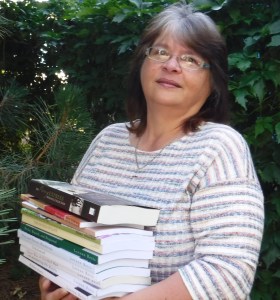 About Donna:
 At the time that I worked Northeast Vice, we owned Griffith Park and part of the Hollywood hills. Complaints about lewd conduct occurring in several areas of the park required the unit to enforce these laws so that the public could better enjoy the park, it’s many hiking trails and spectacular views of the city.
 Rick, my partner, and I were assigned to work that trail. I drew the short straw and would be the ‘trick.’ Rick hid in the bushes where he could cover me and be a witness to the violation while I stood on the trail, the bait. Soon enough came this rather large individual—about 265 pounds and about 6 feet. I was playing with a twig and my arms were chest level. The individual stood about 10 feet to my right and slowly worked his way toward me. Now, the deal was when the violation occurred, I was to step to the side, Rick would emerge from the bushes, we would identify ourselves, advise the guy why he was being arrested, hook him up and off to jail.
 I was laying on my back holding onto the guy when I hear Rick sliding on his butt down the hill, shouting for me to hold on. Then, I heard a “snap,” and I found myself looking at the ground, my left leg out to the side. I let go of the guy as the pain started to get serious. Rick sails past me toward the soon-to-be-arrested violator as I am attempting to dislodge my leg. The boot slipped out of the rut and down I went, landing on my left shoulder.
 Entering contests are a no-brainer for me. I can directly attribute my entry into the realm of traditional publishing (albeit a small press) to winning a contest. I’ll bet many authors could say the same.
 As events progressed, both novels with Oak Tree Press went to press with the third, With Malice Aforethought, in contract. Sadly, Oak Tree’s production has fallen into limbo with the ongoing health issues of its publisher, Billie Johnson. Johnson offered many OTP authors their rights, so I took mine. The short version of this story is I now have another publisher, Aakenbaaken & Kent, with whom I’m very pleased. I’m currently working on another Nick and Meredith Mystery, working title, Felon with a Firearm. I’m hustling to get it finished for the next PSWA writing contest that opens in May.
 I’m also looking into other places to submit my work for competition. In 2015, the East Texas Writers Guild awarded Malice third place in “Best First Chapter” category. There are many more contests in which to submit your work. Start with a Google search: I use “mystery contests.” It helps to search within your genre.