Categories
Street Stories The Call Box

The Call Box: A Vast Wasteland

By Ed Meckle, Retired LAPDpolic-call-box-pedestal-lapd-gamewell-DCAL2786_dt1
Fifty-six years ago, Newton Minow, then chairman of the F.C.C. uttered the still quotable line describing TV as “a vast wasteland.”

As true now as then, most people gain their perspective of various occupations or professions from TV. Doctors, attorneys and yes, police officers.

TV helps people to understand us–what, with our wild car chases, daily gunfights, magic deductions, the treatment of victims and especially suspects, instant DNA and so on.
I have said it before and now again. Most of the job is non-confrontational and non-criminal. I understand that no one would watch a show of an officer giving directions, helping someone locked out of their house or car, looking for lost kids, etc.

The reality is a wild, crazy, funny wonderful ride with God knows what encountered along the way, from the mundane to “you ain’t gonna believe this.” Police work is the thrill of living by your wits and sometimes flying by the seat of your pants. Just the satisfaction you get from doing the job, especially when there is no one there to say, “Atta boy.”

Two examples:

Los_Angeles_Memorial_Coliseum_-_USC
Los Angeles Memorial Coliseum

I was a uniformed officer assigned to some event or another at the Memorial Coliseum, that monolithic home to the 1932 Olympics. I was walking a solo beat on one of the concourse levels, the wide cement “roads,” home to food stands, beer sales and massive restrooms that circle the inside of the venue.

I was approached by a man who reported. “There’s trouble in the men’s restroom.” He was gone before I could obtain any details.

Eight to ten feet inside the door, the problem was evident. A well dressed, middle-aged woman had inadvertently entered the men’s room. The urinals, probably twenty plus, are against the far wall. As she entered someone yelled, “Lady in the room,” at which time a good number of the men at the urinals turned as one to see what was happening.
The woman is now face to face, so to speak, with a situation she was unprepared for. She appeared frozen and unable to move. I stepped in front of her, close enough to block her view. Taking her by the shoulders, I attempted to turn and push her out the door.

She was rigid as a board and was not breathing.

Finally, I was able to break her free and start her moving while shaking her and telling her to breathe.

Once outside, she transitioned from not-breathing to hyperventilation. And she started to melt. Now, I was trying to hold her upright for a few seconds when she regained her composure. She straightened her clothing and without ever uttering a word or looking at me—was gone.

~~~
graphicstock-illustration-of-a-cartoon-angry-policeman-cop-_rFR6Esf2Kb_thumbYears earlier, I was working patrol. My partner Frank Isbell and I were in the station for some reason. As I passed the watch commanders office the sergeant called, “Meckle, see me.”
Yes, sergeant.
The following is the gist of that conversation:
Sergeant: Did you write a ticket to a [consulting note] Norman Williams earlier?
Me: Yes, Sergeant.
Sergeant: Did you have a problem with him?
Me: No, Sergeant.
Sergeant: He came in to complain that you called him a [consulting note again] “peragidave.”
Me: A what, Sergeant?
Sergeant: [consulting] A “peragidave or peragidive.”
Me: What’s a peragidive, Sergeant?
Sergeant: I was hoping you could tell me.
Me: Honest, Sergeant. I have no idea what he is talking about. My partner was there the whole time.
Frank has now entered the office and is standing just inside the door trying not to laugh out loud.
Sergeant: [to Frank] Well?
Frank: [shrugged] Nothing, Sarge. [smothering a laugh]
Sergeant: What?
Frank: Honest. Nothing, Sarge.
Sergeant: [to me] Did you say or do anything that would make him drive all this way to complain?
Me: All I did was write him a ticket. He wasn’t happy and said, ‘This is going to court.’ And I said, oh—
Sergeant: What, ‘oh’ what?
Me: I said, “That’s your prerogative.” Aw jeez.
Sergeant: I’m betting he didn’t understand what you said, kept repeating it to himself all the way here and it became peragidave. Do us both a favor. No more big words on the street.

Note: you can’t have laughs like that flipping burgers or bagging groceries, boys and girls.

Categories
Street Stories The Call Box

The Call Box: Roll Call Training

By Ed Meckle, Retired LAPD

roll call West Midlands Police
West Midlands Police, UK, briefing,


The LAPD has had a policy in place for eons which mandated a few minutes of daily patrol roll call to “training.” The department published material and sometimes a real effort was made to comply. Mostly however it was an afterthought.

I thought if ever given the chance, I would try something different, something interesting maybe even something useful.

Years later as a junior sergeant at 77th Street Division I had every title possible. Sort of the LAPD version of Ensign Pulver, I was not in charge of laundry and morale but I was “Roll Call Training Guy.”

None of the other sergeants, all old timers, were the least bit interested in the job. It was just as well—the lieutenant, nearing retirement, let it be known, (he did not speak to junior sergeants) that two times a week was more than enough for training, as it was all “stuff and nonsense” anyhow. Besides he never attended roll call which was handled by the senior sergeants, who could not have cared if I read the communist manifesto as long as they did not have to listen.

I said to myself, self: you think you are such a hotshot find something good.

I had a classmate, Bob Burke, working at the academy who loaned me a slide projector and dug up some really great FBI type slides. “Suspect with gun,” “suspect with gun and hostage,” “unarmed suspect,” “citizen with tool that looks like a gun,”—you get the idea. The photo lab was a gold mine for more slides, photos of weapons that didn’t look like weapons, slides of drugs, exotic burglar tools. And more.

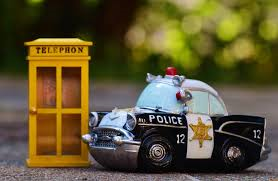
police carNow old street cops (and the 77th was a choice assignment so it was loaded with old cops) were not too anxious to listen to some kid sergeant tell them about police work. They were polite but skeptical at first but nobody threw anything at me and after a short period they got into it. I made a game of the suspect with a gun slides.

The troops yelling, “shoot,” “don’t shoot,” took a lot of ribbing when they “shot” a civilian.
I had a friend working narcotics talk of “hype recognition,” an auto theft guy talked of VIN’s (vehicle identification numbers), etc. and the lieutenant never knew any of this.
Then the lieutenant retired, I transferred, and the program died.

Many years later the training fires still burned and as a uniformed lieutenant at Hollywood (PM)and Wilshire (days) my program came back to life. Now at Hollywood, all my sergeants were young, new and probationers, as was I. We had some brainstorming sessions and decided what we could do, what would work or not and what would be most useful. Topics demonstrated were such as: How to properly search a suspect, a room, and a car. When we pulled the rear seat on a black and white, it looked like a Columbian drug lord’s arsenal.

My all-time favorite though was as roll call ended, the troops were told to remain seated and look alive. At that moment an individual unknown to them entered the room and in a loud clear voice stated, “My name is–. I just killed–. The body is located at–.” Plus, another five items of information. He was in the room less than 20 seconds.

The troops would have one minute to answer a 10-question quiz. We added a twist by having the suspect use a color as his last name and that of the victim. He also gave the color of his vehicle. He was wearing a red and white striped shirt.

burglar-157142_960_720As he ran out he yelled, “My shirt is black.” Questions number 9 and 10 were physical description of suspect and clothing worn. Yep, some “saw” black.

As the patrol force got younger, I had probationers working with probationers. The term training officer had not yet come into existence. We tried to teach at roll call what they should have learned on the street.

See now: south/east/even/north/odd/west for addresses, palm print on the trunk, no-yes/no answers, was the 459 (burglary) amateur or pro? Bugs on rear plate, etc.

Over the years I grew weary of writing 15.7’s (memos) proposing a permanent 2-3-person cadre traveling roll call to roll call doing a much better job with scenarios than we did. It never happened and then I was gone.

Categories
Street Stories The Call Box

The Call Box: Life on the Frontier

polic-call-box-pedestal-lapd-gamewell-DCAL2786_dt1By Ed Meckle, Retired LAPD

On the TV news recently, I watched as several black and whites along with some officers on foot attempted to herd escaped cattle in the middle of the night. While they played cowboy, I sighed thinking I had never had a call like that. 

I never chased a wayward horse, mule, donkey or even an old milk cow. I never went in pursuit of a sheep, goat, or even a fat old pig. 

 I did however remember two interesting animal calls.

“3-A-15, See the woman; unknown trouble.” Oh boy, let’s pause here for a second. When a person calls the police, the phone is usually answered by a sworn officer (depending on the size of the department) who attempts to determine the nature of the problem and whether to dispatch a car.

If the call comes out as “unknown trouble,” it means a trained officer was unable to determine the problem. Cops hate these calls. It could be anything from a cockroach in the bathtub to “I think there is an atomic bomb in my attic.”

crying-1299426__340The caller was at the curb when we arrived. The middle-aged housewife bounding up and down, crying and so worked-up she had the hiccups. We tried to calm her down and convince her she was safe and to tell us what the problem was. She gestured toward the house and finally said, “Snake.”

“OK, where?” I ask.

“Kitchen under the fridge.”

“How big?” 

She holds her hands approximately 20-24 inches apart.

I asked, “What kind?”

Her answer was an annoyed look and a shrug.

We all know Southern Calif is a desert and all I can envision is RATTLESNAKE. I am also aware that I never met a snake that I liked. I have no desire to cultivate a relationship with one now and do not intend to change my mind. 

 The house was a small WWII duplex—the kind that seem to be everywhere. She tells us the back door is unlocked so my partner and I decided to surround the critter, Frank in the back door to the kitchen. I went through the living room. Batons at the ready we entered the kitchen and there he was coiled in front of the refrigerator.

Copperhead? Cotton Mouth? Mamba? Rattler? or could it be a Fer de Lance?

NO

garter snake
Garter snake

It is 10 inches of ferocious garter snake. The housewife provided a shoe box and after a short struggle, he was subdued. 

She refused to look so there was no discussion regards length. We released him with a stern warning at a nearby vacant lot.

Another chapter in the “Naked City” (sorry about that)


Another time:

“3-A-15 Choking Baby, FD (fire department) enroute, code three.” We were only a few minutes off and were there quickly. Front door was open, and we heard wailing from the rear.

Rott in back yardIn the back yard we see a woman trying to support the weight of a large dog who when attempting to jump to freedom, snagged his choke chain on the fence, and hanged himself. He appeared lifeless and the woman was unable to lift him high enough to get him down.

As we lay him on the lawn the FD arrives. Frank alerted them, and they brought a portable oxygen bottle. 

In a few minutes they had revived him. Everybody congratulated everybody, too emotional to speak.

It is my understanding the F.D. now carries small animal sized masks. 

Oh, and the dog’s name was “Baby.”


Categories
Street Stories The Call Box

The Call Box: How I Saved Los Angeles from a Tsunami (sort of)

polic-call-box-pedestal-lapd-gamewell-DCAL2786_dt1By Ed Meckle, Retired LAPD

Prior to December 26, 2004 I had never heard the term tsunami. Watching film as the walls of water from the Indian Ocean swept thousands to their deaths was almost too much to comprehend.

Caused by a 9.0 earthquake in the Indian ocean off the West coast of Sumatra it had the energy of thousands of atomic bombs. Within hours killer waves slammed into the coast line of eleven countries from East Africa to Thailand, traveling thousands of miles, they destroyed cities and killed an estimated 227,898 people.

LAPD class a uniform
LAPD Class A uniform photo courtesy of Gall’s

That said, let me tell you of the great L.A. tsunami. Many, many years prior I was working Metro; a bachelor living the good life in Hollywood. As I recall it was hot. Summer? Who can tell in LA? It was morning and I was scheduled to work that night. The call from the office told me to report ASAP in Class A uniform, emergency and bring your rain boots. Rain boots??

An hour later I was on one of many buses rolling out of the main police building. We were briefed as we went. My partner could not be found so I was paired with a non-Metro officer who I do not know and who was probably scooped up when they were frantically looking for blue suits. The non-Metro sergeant told us a major earthquake in the far Western Pacific near Hawaii had produced a large tidal wave which was expected to hit the LA coastline at an unknown time—time estimates kept changing.
Now the rain boots made sense of course. A massive wall of water is about to hit the city and I had a pair of boots which end at mid-calf. Sure. Why not?

We were to locate and warn as many people as possible and to provide assistance as necessary. They dropped my partner and I together with the sergeant at some small boat marina. We were on foot, no vehicle and no radio, no method of communication. The sergeant tells us to spend not more than one hour warning as many people as possible and then get out, find high ground.

Stereotypical LA
Marina Del Rey, Los Angeles

“High Ground?” We were at the beach for God’s sake and we didn’t have a car. Assuming the boat house or whatever will have a P.A. system we head there. The 18-year-old minding the store said he had to find the owner to get permission for us to use the loud speaker. I told him he has three minutes or else. I have no idea what or else was, but it sounded good. Two minutes later I was on the PA system trying to keep it low key but informing one and all there was trouble coming. The civilian radio had broadcast a warning or warnings earlier in the day. When I was finished with the PA several people on the docks looked in our direction and then went on about their business. One middle aged lady actually came into the office and wanted to know if we were really policemen.

tsunami Ao Nang, Krabi Province, Thailand 2004Within the hour we joined the sergeant on the roof of a nearby two-story building.

We waited for the magic hour as it approached, then passed. Nothing, absolutely nothing. The buses finally picked us up and we went back down town in silence feeling for all the world like fools. Nobody knew anything. At the office we were told the wave slowed and then died somewhere in mid Pacific—they thought.

I took my boots and went home.

Categories
More Street Stories

The Lonely Wheelchair

By Keith Bettinger, Retired Suffolk County (N.Y.) Police

Keith’s first Just the Facts, Ma’am post about the shooting was here on October 9th, 2017.

View_from_the_Foundation_Room_(24089601122)October 1, 2017 will always be remembered as Las Vegas’ day of infamy. Death and injury rained down on country music lovers from the heights of the thirty-second floor of the Mandalay Bay Hotel and Casino, stealing the lives of fifty-eight people and causing injury to more than five hundred others.
Survival instincts and fear gripped the attendees and performers and people began running away from the scene onto Las Vegas Boulevard as well as through the open fields being used for parking.

People ran for blocks seeking shelter in other casinos. Some broke through fences and then broke the windows of ground floor offices seeking shelter within from the bullets raining down on them. For those that kept running, many wound up on the McCarran Airport runways, taking cover in the adjacent rain channels. Others attempted to hide at the scene under bleachers or under canvas canopies, hoping out of sight also meant out of the assassin’s mind.

Aerial view of Las Vegas, focusing on the Luxor Hotel "pyramid."The murderer killed himself. The shooting stopped, and the sun eventually rose that Sunday morning. All anyone could see were the remnants of the carnage that covered an extremely large crime scene; the likes of which few law enforcement officers had ever seen.

It would take weeks to photograph, recover, inventory, process and eventually return items to either the rightful owner or their surviving family members.
The hard-packed dirt field just east of the stage and audience area was filled with cars, tractor and trailers, buses and motor homes. The cars belonged to the concert attendees. The trucks, buses and motor homes belonged to the performers and their crews.
For days these vehicles did not move as evidence technicians processed the overwhelming crime scene. Eventually the evidence was gathered, and the vehicles were released. Some were driven from the scene. Others were towed back to the rental agencies by a caravan of tow trucks since the lessees had left town. As they left the field, you could see the shot-out windows, doors and fenders. The performers’ vehicles didn’t fare any better. They too had to wait days until they were allowed to leave what should have been a wonderful evening’s entertainment instead of a night of terror and carnage.

empty-wheelchair-e1536880143408.jpg
OLYMPUS DIGITAL CAMERA

When the field was emptied of cars and trucks and the blood was disinfected and cleansed from the ground, just one thing remained; an empty and overturned wheelchair.

Looking at the wheelchair in its lonely state left one wondering trying to answer so many questions. Who was the occupant? Did the person make it this far on his own only to topple over? Was someone pushing him? Did someone carry him to safety? Was he pulled to safety behind a parked car? Did people, terrified and fleeing, leave him to fend for himself?

Eventually the wheelchair was not alone. Two evidence technicians walked across the field, righted the wheelchair and pushed it into the evidence processing facility.
The wheelchair was no longer alone. It joined the other evidence waiting to be processed.

But it left one important question unanswered – WHY?

About Keith Bettinger:

Keith Bettinger is a retired Suffolk County (N.Y.) Police Officer. He’s been writing for law enforcement publications for more than 25 years and has received 19 awards for his articles, stories, poems, and books. He has a Master’s Degree in Human Relations with a major in Clinical Counseling. During his career he received the department’s Bravery Medal, Silver Shield Award, Meritorious Police Service Award, Special Service Award, Professionalization Award, Department Recognition Award, five Headquarters commendations and six Precinct commendations. He also was a field training officer and an instructor on Post Shooting Trauma and Critical Incidents. Keith has written three books, FIGHTING CRIME WITH “SOME “DAY AND LENNY, END OF WATCH AND MURDER IN McHENRY. He has also contributed stories to the following anthologies: I Pledge Allegiance, Cop Tales 2000, Charity, True Blue, To Protect and Serve, and Dad’s Bow Tie. He also shares with Jack Miller, the screenplay Master Cheat. Keith lives in Las Vegas with his wife Lynn.
It is my pleasure to host my good friend, Keith Bettinger. In addition to the things mentioned in his bio, he was also at the 9/11 Ground Zero. Being the author who reviewed the manuscript for my first book, “We Are Different Now – a grandparents journey through grief”, he had a big impact on my first becoming a published author. We hope you’ll leave a comment to let us know you stopped by to enjoy his article.

Categories
More Street Stories

Guest Post: Danny

Please welcome Keith Bettinger, a retired police officer from Suffolk County, NY. Keith has offered us several stories which we will see in the coming weeks.

By Keith Bettinger

Being the guest speaker chairperson for the Shields of Long Island at the time, I needed to find a Christmas meeting speaker for the December meeting. I was fortunate to find John Carlsen. At that time, John was a Deputy Inspector with the Nassau County, N.Y. Police Department. He and his wife, Kathleen had a son named Danny. John came to the Shields meeting because he had a story to tell, a story about Danny.

boy-in-a-wheelchairDanny was a unique child. Prenatal ultrasound showed a condition named hydrocephalus, or commonly referred to as “water on the brain.” Suggestions were made to terminate the pregnancy. After a great deal of discussion, prayer, and tears, Kathleen and John said no. They would have their child and love him no matter what.

On June 6, 1983, Danny was born. Not only did he have hydrocephalus, but he also had spina bifida. Within an hour of his birth, Danny underwent dangerous surgery. Danny wasn’t expected to survive, but he did. Doctors said he would never walk or talk. Kathleen and John never gave up hope.

Danny grew up to be a loving, wonderful child. He went to school. He had many friends. None of them looked at Danny as being handicapped. Danny just used special equipment to get around and get around he did. He competed in the New York State Games for the Physically Challenged and did so for six years, winning more than twenty gold medals.
Danny also became a Youth Ambassador for March of Dimes. He was a natural for the job, having a warm smile, and the gift of gab. He was a born politician. Helping the March of Dimes was important to Danny. Every time his photo appeared in the paper, he called his father at work and said “Hey, Dad, I’m famous again!”

Being different from other children never stopped Danny or his family. He and his parents did everything other families do. They went to baseball games. They visited Disneyworld. They even toured the Smokey Mountains by helicopter. Danny was so well known and liked, that in 1994, his community invited him to be the official lighter of the village Christmas tree.

Danny endured many surgeries during his childhood. He seemed to give strength to the people around him. He had an amazing sense of humor and a quick wit. At the same time, he was sensitive. He wasn’t embarrassed if hugged and kissed in front of his friends. As John said, Danny was one of a kind.

Danny visited his father and the officers assigned to the bureau. Danny loved police officers, and the officers enjoyed his visits. Like many kids, Danny wanted to be a cop. At home, Danny would write his own police reports about the activities in the neighborhood. He told his parents when he grew up, he was going to be a police officer.

Maryland State PoliceThis troubled John and Kathleen. As Danny grew up, they always encouraged him to do his best, that he could be anything he wanted to be. After all the encouragement given their son, how could they tell him, the one thing he really wanted to be, was beyond his reach?

One day in August 1995, Danny woke up with what appeared to be a cold. His parents looked after him that morning. John was sitting on the bed with Danny when Danny stopped breathing. He had developed myocarditis. His parents called 911 and Danny’s heroes – the police responded. They came with their patrol cars and ambulances. John gave his son CPR and the officers helped. They rushed the child who wanted to be just like them, to the hospital. Doctors did their best, but to no avail. If you ever tried to save a child’s life and lost, you know the anguish. Few people know the agony of trying to save their own child and losing that battle.

hearseAs devastated as they were, John and Kathleen decided to let Danny give the gift of sight to those in need. Doctors harvested his corneas and sent them to other hospitals.
At the funeral John and Kathleen were amazed to see how many people loved Danny. More than one thousand people attended his wake. Everyone came to pay their respects; friends and relatives, school bus drivers, teachers, and of course his police officers, all came to say their goodbyes.

The day of Danny’s funeral he received full police honors. Members of the Emergency Services Unit were his pallbearers. There were rows of police cars outside the church. Police Officers stood at attention and saluted while bagpipes played. School Crossing Guards stood in formation. Motorcycles escorted the procession to the cemetery where an honor guard waited for Danny; mounted officers, and his friends from Emergency Services. Officers saluted, crying.

John and Kathleen wanted to share Danny with the people who received his eyes. They contacted the eye bank and asked for a meeting. After a while, a letter arrived. One of the recipients, wanted to meet them. He wanted to thank them for allowing Danny’s cornea to be donated and giving him the gift of sight. Kathleen and John wanted to let this young man know what a wonderful child Danny was.

When they met this man, Ray, they realized once again, God and Danny work in mysterious ways. Ray was about to lose the sight in one eye due to the infection. Danny’s cornea saved not only Ray’s sight, but his job as well. The job Ray was able to keep is the job he wanted and enjoyed; Ray is a New York City Police Officer.

Danny finally got the job he always wanted.
~~~

Keith Bettinger is a retired Suffolk County, NY Police Officer. He’s been writing for law enforcement publications for over 25 years and has received 18 awards for his articles, stories, and books. He has written two books, Fighting Crime with Some Day and Lenny, and End of Watch. He has also contributed his writings in many anthologies including the recently released, I Pledge Allegiance…


Categories
More Street Stories

JOE

By Anthony Morgan, Retired Oakland PD

Anthony wrote this tribute to a fellow cop in 1983. It stands the test of time.–Thonie

JOE 

1908-1983

Funeral for Phoenix Police Officer Issac Ros
Funeral for Phoenix PD Officer Isaac Rossario


A friend of mine passed away a few days ago. His name was Joe-the last name is not important. He was 74 years old. Joe was a cop. He retired about 14 years ago after 33 years’ service with the San Francisco Police Department. If my math is correct he started in 1936. Joe was a cop up to the day he died. He loved the profession and he was immensely proud of the Inspectors badge he carried for a good portion of his career.
Joe fit the role of the detective in the old “B” movies of yesteryear. A man of medium height and ruddy complexion, I can picture him wearing a freshly laundered white shirt, grey suit and tie and the ever-present hat. Donning a knee length overcoat to go out on a case on a foggy San Francisco evening always seemed to complete the plainclothes uniform. His stories of the “old days” conjured up images of Bogart in “The Maltese Falcon”. The cops back then, he said, solved cases by wearing out the soles of their shoes. The old guys got the job done by hard work and a lot of luck. Joe said that the detectives of today have the luxury of computers and new-age technology. God knows what he would think of today’s investigators. But, he would probably say that all cases are still solved by hard work and occasional luck.

After his retirement Joe remained in touch with law enforcement and his fellow co-workers. He became involved with the Veteran Officers Association. Joe worked hard to insure the rights and benefits of the active and retired officers remained intact and free from tampering by the City. He was a battler and one to give up without a fight over an issue he thought important. Occasionally someone would comment that he was wasting his retirement years working so hard. It wasn’t a waste of time for Joe. He enjoyed helping others and it gave him a sense of purpose.

Back in the early 70’s, I told him that I wanted to get into police work. He sat there for a moment and then he told me to go to Oakland. I thought for sure he would steer me toward S.F.P.D. Joe said the police department was having some troubles. It was mired in some pretty heavy and negative politics and stuck in a hiring freeze. He saw a strike on the horizon. He mentioned that the Oakland Police Department had the finest training and had the reputation of being a progressive police agency. Joe felt that it would take the S.F. Police Department years to recover. Armed with his advice, I applied for O.P.D.

After my graduation for the Academy he wrote me a note. It read, “To the new Cop-good luck and best wishes for a great career. Have fun.” It was signed “an old has-been.” I always thought that it must have been pretty dull being a police officer in the “old days.” After all, everything seems to happen so fast today. It wasn’t until I had some time on the job that I began to see some similarity between his years and mine. A number of his war stories were the same as mine, just the names and settings were different. It just seemed that the people were a bit more civilized back then.

Joe would get fully involved in his stories. He would start rubbing his hands and occasionally poke the listener in the shoulder just to emphasize a point. His voice would rise and fall in the old San Francisco Mission dialect-a little Boston Irish taint. The Mission accent would become even more pronounced as he reached the end of his tale. He always tried never to end on a sour note. He added humor and always tried to make a point.

One time I asked him what the high point of his career was. After a pause he replied, “I went 33 years without ever having to use my gun on someone. I was very fortunate.” He wished the same for every cop.

At the funeral service I saw some of his buddies from the job. All of them were about the same age as Joe. Their posture was stooped, their walk a little slow. There is a tinge of sadness in their voices as they recalled the old days. Their ranks are thinning. They all know that the day will soon come that no one will be left to tell their stories of accomplishments and failures. I looked hard into their eyes of these men. I could tell they were cops. Or, as Joe would say “They ARE cops.” He felt the saying “once a cop, always a cop” was true.

Joe had a lot of respect for the title “COP.” He always greeted me with “Howya doin’, cop?” He felt that cops were something special. He loved the word “cop.” He mentioned that being a cop meant being strong and having integrity. He expected cops to fail occasionally but what made them different was their ability to get back up and face the troubles head-on. Being a cop in his day was something to be proud of. In thinking about it, being a cop today still is something to be proud of.

Joe, to you I say thanks for everything, for being a mentor, and…so long, COP.

Categories
More Street Stories

Guest Post: What is Your Badge or Star Worth to You?

By Anthony Morgan, Retired Oakland Police Department

What is your badge or star worth to you?

To the new officer it is a sign that says “Look at what I have accomplished, look at what I am.” It doesn’t take long for the badge to become a part of the owner and the owner part of the badge. Maybe that is because it was earned through the trying months of the academy and field training, a successfully completed probation and becoming part of a team.

In the early years of a career the badge rarely leaves the officer. When not adorning the uniform it can be found on the pants belt or filling a badge wallet. It would not be a surprise to find that it was pinned to a shirt while sleeping. Before the newness wears off, the owner’s hand will periodically check to see if it’s still in place. Woe to the person that loses his or her badge.

As the years pass less thought is given to the badge. It becomes part of the daily uniform donning ritual, as common as just putting on a pair of socks. After a shift it frequently remains pinned to the uniform shirt and hung up in the locker to await another shift. Short of an occasional buffing no unusual thought is given to it.

As law enforcement officers we place a black band across the face of the badge in memory of a fellow cop who has fallen in the line of duty. We take a closer look at it and may start carrying it more often. We may think about the meaning of that piece of metal and appreciate it a bit more. When you see the badge of the fallen officer handed over to a family member you are made aware of the value it holds for the spouse, a child, a parent. They rub their fingers over the number, the agency name trying to get a sense of their officer.

It really isn’t until one leaves the police service that the importance of the badge is realized. That badge—your badge—was issued to you a long time ago. It was the ultimate sign that you took the “test” and were found worthy of that piece of designer metal. You were one of dozens, maybe hundreds, of individuals who attempted to meet the standard set so high for police officers.

Each day validated your fitness to be called a cop. You earned the right to wear that symbol of law and integrity by taking on the tasks that others could not or would not do. You sacrificed your youth to wear that badge honorably and to make a difference.

Eventually, the day comes that you walk into the Personnel Office and lay your badge on the counter. A part of you goes with it. That badge said who you were and what you have become. It accompanied you to every disturbance, every heart-wrenching call and, to every funeral. It is the symbol that made you stand apart from others who were not fortunate to wear the badge. That badge is yours. It sat on your chest next to your heart and became an extension of it. When that “cheap” piece of metal, which was paid for at such a high price, is handed over, so goes a piece of your soul and heart.

It is on that day that you remember what that badge did for you the first time you held it. The pride and the excitement that coursed through your mind and body. On your last day you are now aware how important that thing is to you and that it wasn’t just part of the uniform. For good or bad, it is you. It accompanied you on the path of spirited rookie to wizened veteran. And now retiree, who must hand it over.

Some departments have a badge waiting for the newly retired officer. It is something that can be displayed with pride in the following years. Often it is just a substitute for YOUR badge which will probably be resurfaced and reissued to another spirited rookie. Some departments issue a flat badge or nothing at all.

I was very lucky. My Sergeants star was an older style with a different design. I never compared it to any of the others, so I didn’t notice any difference. The Personnel officer said “wow, is that one old. I haven’t seen one of these in a few years. We’ll get you a new one with the ‘RETIRED’ flag on it.”

No way. I wanted my star. He assured me that he would get it back to me after the flag was attached. He was true to his word after many months of waiting. I still carry my star in a wallet to this day.

I happened to write a letter to my chief asking permission to have a copy of my Sergeant Star and my Police Officer Star made for a shadow box. I must have caught him on a good mood day. He granted my request. I have my Sergeant Star #209 and my Police Officer Star #426 hanging side by side along with other mementos on a wall in the house.

It is amazing that a cheap piece of metal with a shiny covering could mean so much. A lifetime of memories and dreams are embedded in each star. Each one is important to its bearer. I hope that everyone who wears a star or a shield will feel the same way.

What are my stars worth to me? They are priceless.

Anthony Morgan
Oakland Police Department
1974-1998


Categories
View from the Tower

View From the Tower: Stations

By John Schick, Retired Department of Corrections, California

(This post was originally a comment to Hal and Ed’s post about their police stations. It was so good, I had to post it on John’s own column.–Thonie)

Prison_guard_tower_(2967623823)Ok, so we’re talking about antiquated work buildings. CIM (Ca Institution for Men where I worked)) was opened in 1941. It was the only prison ever built by the WPA (Works Progress Administration) during WW-II. Originally it was a honor farm work camp: It had no walls. It has four facilities: Reception Center West, Reception Center East, Reception Center Central (RCC), and CIM-Main (minimum custody level 1 inmates.) The entire facility (with additions) held 6,500 inmates. We ALWAYS had more. It was the ONLY Reception Center in southern Calif. until Otay-Mesa (Donovan) was activated in 1987. We used to receive jail buses from the counties of LA, Riverside, San Diego, Orange, and San Bernardino. It made for a busy day every day.

Prior to the installation of electric cell doors EVERYTHING was gang box manual cell control. If you’ve ever toured Alcatraz, you saw manual levers for opening and closing cell doors. Ours was very similar. It took some getting used to. Ofttimes the doors wouldn’t lock, so we had to secure them with handcuffs. Almost every cell block had three tiers. After 8 hours of running up and down stairs you were ready to hit the gate UNLESS you got ordered over due to staff shortages. THEN you got 16 hours of stairs to handle. No overweight people were overweight for long.

On the West yard where I worked most of my career we had one story 150-man dormitories. They were a dilapidated to say the least. Toilets were clogged. The showers quit working. The heaters broke. A/C? Nah! Every Spring the dorms would be overrun by termite queen swarms. They were crawling on the walls. They were flying in your face. They would fill up the overhead light covers. You had to shake out your uniform and belongings to make sure you didn’t take a queen termite home with you. Our maintenance department was ineffective, to say the least.

In the RCC higher security building (erected in 1951) was a concrete dungeon. All it needed was a draw bridge. At night you could count on a visit from either Mr. Cockroach, OR Mr. Mouse, or both. There were THOUSANDS of them. The basement was an adventure. Usually half full of water it was a home to Olympic-sized cockroaches. I measured one at almost three inches in his bare feet! Despite efforts to eliminate their numbers they thrived. It was cool down there. It was moist and smelled like a putrefying bog. Perfect!

dairy cattleI should mention that CIM had a dairy herd of about 200 milking cows on grounds. The flies and smell of manure was in the summer horrific. The ammonia was enough to clear your nostrils! Not only did WE have dairy cows, but the entire end of southern Chino was at one time the largest dairy reserve in the world. So, there was an unending supply of manure aroma to satisfy the most sensitive noses. At night we would get thick fog that would pick up the manure scent and carry it into the dorms.

I heard an inmate complain one particularly stinky night, “Man! That’s 100% bullshit!”

I had to concur.

Categories
More Street Stories

Happy Thanksgiving!

By Thonie Hevron

Our usual post from our roster of coppers is taking a break today. For Hal Collier’s take on turkey day on the job, go to Thursday’s post.

We have a lot to be thankful for: if you are reading this, you likely have your own device be it pc, phone, laptop, or tablet. I am thankful that you have the mean$ to afford it. If you’re reading this at home, I’m thankful you have a roof over your head. If you’re at work, glad you have a job.

2017 has been a crazy year. I’m thankful that my career pays me not to come to work (Hm, maybe I should re-think that one, but retirement is worth it!). I’m thankful that I have a family that supports us and comes when needed, even when not asked (I’m not so good at asking for help). I’m thankful to be living in a wonderful small town, Petaluma, Ca. where both my husband and I worked for years–he retired from Petaluma Fire Department and I worked for Petaluma PD for ten years. I live in a block where three or four of my old co-workers live and thankfully, I see them regularly. This is HOME.

Speaking of home, my sisters Pat and Nancy are my home both here and long distance. Thank you for being my irreverent, silly, loving sisters. Cousins Sue and Sandie are the best!

I have some of the best friends ever! I thank God every day for Jan and Lori, Maria and Billie, and so many more. Thanks for holding me up when I need it and making me laugh–all of you!

I’m thankful for my goofy dog, Jimmy who makes me laugh and my kitty, Yaz, who give great cuddles.


OLYMPUS DIGITAL CAMERA
Photo taken 4.01.2010 at Oakmont’s Quail Inn

But most of all, I’m thankful for my lovely husband, Danny. I cannot imagine life without him. For thirty-five years, he’s been beside me, walking this path of life. His humor, insights and morality inspire me daily. If not for him, I wouldn’t have found the focus (or time) to write.


But that’s another story.

I’m thankful for all the blessings in my life. And you, dear reader, are a huge part of that! I’m thankful for you.

–Thonie