
By Mikey, Retired LAPD
 One of my passions during my law enforcement career was officer safety and I preached it at every opportunity. Officer safety is a philosophy not a program; programs fail, and you can’t fail at officer safety. It is all about situational awareness. In terms of cognitive psychology, situational awareness refers to a decision-maker’s dynamic mental model of his or her evolving task situation. In other words, what you perceive, and your response is all about experience vs. the situation. It all starts at the threshold of the event. What do I have? Do I understand what I have? Can I handle the situation/event with what I have at my immediate disposal?
A good example was a radio call of a robbery in progress at a bank. As a training officer and his probationer rolled up to the front of the bank an armed suspect with a shot gun exited the front door. He saw the officers and immediately dropped the weapon. Back at the station the probationer asked the training officer why he hadn’t shot. He said he did not observe the suspect’s left shoulder drop or the barrel of the shot gun swing in their direction. If any of those two events had occurred, he said he would have shot. The training officer asked the probationer why she hadn’t shot, her answer, “’Cause you didn’t.”

Another point I would emphasis is “partners can not get stupid at the same time, ever!” On the LAPD, the majority of patrol is conducted with “A” or two officer patrol cars. There are very few “L” or one officer patrol cars. On smaller agencies, “L” cars are the norm. Depending on the patrol policies of the agency, two or more “L” cars can be dispatched to a radio call, depending on the seriousness of the call. So, the point is made regardless. Cool heads must prevail, or partners will suffer the negative consequences of an internal/external investigation, lawsuit or termination. I responded to an officer involved shooting in Rampart in ’92. Because of the officer’s bill of rights, there are few questions me as a supervisor can ask. Before I asked the questions, one of the officers involved said, “Sarge, we didn’t get stupid at the same time. We didn’t get stupid at all. We just want you to know that.” They displayed effective controlled fire and communicated throughout the event. Guess they were listening at roll call training.
“O.W.B.E” or Over Whelmed by Events is not an option. Stay in control is the overall theme here. For some reason in critical situations that I have been in, I visualize a light switch. Who is going to turn it off? Is it my switch? Is this it, and is this how it ends? No, you work the problem because there is always something else to do. I have often said that if the light switch is turned off, it’s because, “I didn’t see it coming.”

In training, I put LAPD on the chalk board and ask the officers if they are willing to die for these letters? Next, I put a street gang name on the board and ask why a banger can take multiple gunshot hits and live? Because he willing to die for his gang and will continue to fight to the end. That’s what he lives for—expecting the worst. He expects the worst!
Most coppers don’t have that mind set going into a critical situation. A good example was a sergeant I worked for at Northeast Division in 1977. He rolled up on a ‘415 man with a gun’ call at a bar and as the sergeant entered the bar, alone, he confronted the man and was immediately shot. I am going to quote the sergeant. “I got shot and said to myself, well I’ve been shot so I guess I’m supposed to fall down.”
And that is what he did. He said he was lucky the guys didn’t stick around to see if he was dead.
I hope this ROLL CALL sends a message and stimulates some critical thinking.


 Murder at the Bus Depot is the fourth Blue Plate Café Mystery by Judy Alter. In it she explores the tension between a developer who sees great possibilities in a small town and residents who want to preserve the history and atmosphere of their town. The conflict is complicated by a resurgence of interest in a thirty-year-old unsolved murder.

 “You will do foolish things, but do them with enthusiasm.” ― Colette
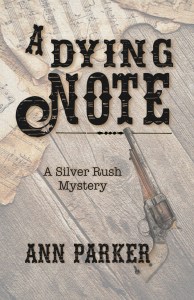
 Since then, I’ve kept my foolishness limited to impulse buys (! for research !) on eBay. Which is how I’ve managed to amass a modest collection of Victorian trade cards from 1880s for my most recent book in the series, A DYING NOTE. Imprudent, perhaps, but much safer than off-roading or hitchhiking, since the only victim is my wallet.

 We come to a side street and see a car parked on the wrong side of the street with the motor running. It’s not the paper boy. Then, I see a guy looking in an apartment window next to the car.
 I’m no narcotics expert but then again, I know that those small baggies are for sale and not personnel use. I arrest this individual for sales of marijuana and book him at downtown Jail Division. It’s where we had to book narcotics arrestees at the time. In the next few days a narcotics detective would gather up all the arrest reports and take them to the district attorney (DA) to file charges.
  Now I don’t usually get too involved in my arrests after I finish the paperwork. I have had a lot of arrests rejected. I try to learn how to write better reports or learn more about search and seizure laws (which by the way, are always changing with each new court decision). This one kind of nagged at me, so I called the filing detective at Narcotics Division. He bluntly told me the DA didn’t believe my arrest report and didn’t want to see me perjure myself on the stand.

 Scott Decker, PhD, began as an FBI Special Agent on the streets of Boston, pursuing bank and armored car robbers. Following September 11, 2001 he transferred to counterterrorism, and investigated the country’s first lethal bioterrorism attack. In 2009, he was awarded the FBI Director’s Award for Outstanding Scientific Advancement. His first non-fiction book, Recounting the Anthrax Attacks: Terror, the Amerithrax Task Force, and the Evolution of Forensics in the FBI, won first place for non-fiction book in the Public Safety Writers Association’s writing competition.
 By Ed Meckle, Retired LAPD
 Working Metro, my partner Frank and I were directed to report to Robbery Division along with another team. They had a limited stakeout and needed two teams. The detective doing the briefing related the following:

 By Thonie Hevron
 To the very young of you, a teletype was the then police method of reaching a lot of other agencies en masse.